Here’s a happy secret: a child doesn’t need long, tricky books to fall in love with reading. The very best books for a six-year-old just starting out are the ones that make them feel like a reading superhero on the very first page.
So how do you spot a brilliant beginner book on the shelf? Look for these friendly features — we’ve sorted them into two easy baskets.
Books That Make Reading Feel Easy
1. Books That Rhyme
When words rhyme, the next one is easy to guess. Bouncy, sing-song books help new readers feel the rhythm of language and join in out loud. Classic rhyming stories like those by Dr. Seuss are favourites because the playful sounds practically read themselves.
2. Books With Repeated Words
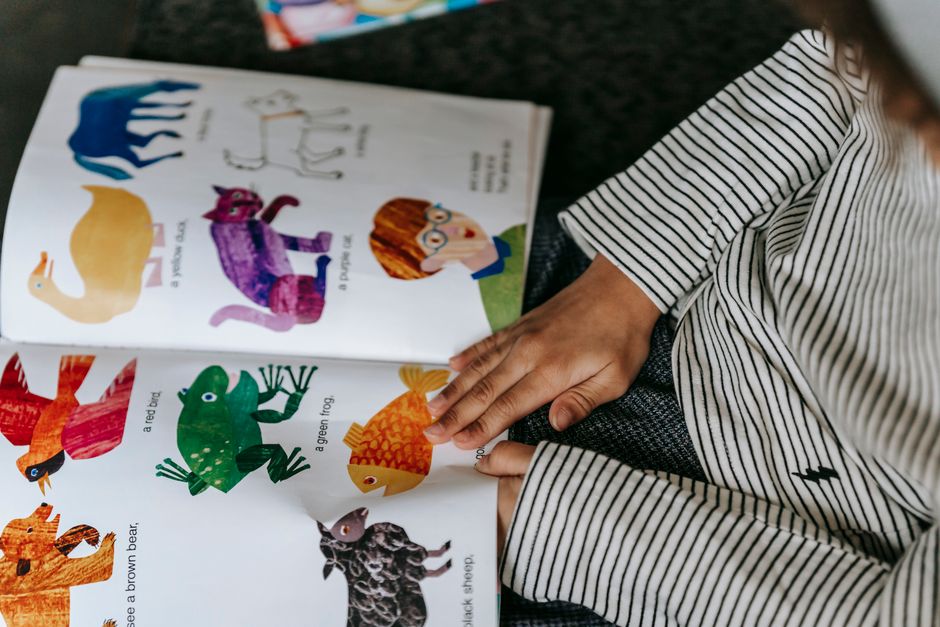
A line that pops up again and again — like “Brown bear, brown bear, what do you see?” — gives a child a word they can read confidently by the second page. Repetition is like training wheels: steady, safe, and full of small wins.
3. Books Bursting With Pictures
Big, bright pictures aren’t just pretty — they’re clues. A six-year-old can peek at the picture to figure out a tricky word, which keeps the story moving and the smiles coming.
🧪 Try This at Home
Read a rhyming line, then pause before the last word and let your child fill it in. Catching the rhyme makes them feel clever — and that feeling keeps them turning pages.
Books That Make Reading Fun
4. Books That Make Them Giggle
Funny books are sneaky teachers. The easy-to-read “Elephant & Piggie” stories by Mo Willems use just a few words per page, big speech bubbles, and lots of laughs — perfect for reading together, one voice each.
5. Books About Their Favourite Things
A child who loves dinosaurs, diggers, or kittens will happily wrestle with harder words to find out what happens next. Match the book to your child’s passion and reading stops feeling like work.
6. First “Chapter” Friends
Gentle early readers with chapters, like the cosy “Frog and Toad” tales by Arnold Lobel, are a proud step up. Short chapters mean a satisfying stopping point and the thrill of saying, “I read a whole chapter!”
🌟 Did You Know?
Reading the same book over and over isn’t boring for a young reader — it’s practice! Each repeat builds speed, confidence, and a love of the story.
🤔 Fact or Fib? — tap your guess!
Rhyming words help a new reader guess what comes next.
A great first book should be long and full of hard words.
Pictures can help a child work out a tricky word.
A Starter Book Basket to Try Tonight
Not sure where to begin? Here are much-loved, easy-to-find books that tick the boxes above. Your local library will have most of them — grab a stack and see which ones spark a smile.
- “Green Eggs and Ham” & “Hop on Pop” by Dr. Seuss — rhyme and repeat, the classic confidence-builders.
- The “Elephant & Piggie” books by Mo Willems — a few words per page, giant speech bubbles, huge giggles.
- “Brown Bear, Brown Bear, What Do You See?” by Bill Martin Jr. & Eric Carle — gentle repetition your child will read by page two.
- “Pete the Cat” by James Dean & Eric Litwin — a cool cat, catchy lines, and a repeat-after-me rhythm.
- The “Fly Guy” series by Tedd Arnold — short, silly, and full of picture clues.
- “Biscuit” by Alyssa Satin Capucilli — a sweet little puppy and very simple sentences.
- “Frog and Toad Are Friends” by Arnold Lobel — the proud step up into short, cosy chapters.
📖 Big Word: Decodable
A “decodable” book uses words a child can sound out with the letter sounds they already know — like the popular Bob Books by Bobby Lynn Maslen. They’re brilliant for very first solo reads.
Once your reader is confidently working through this basket, two natural next steps: if they’re drawn to space, dinosaurs, or “what if” questions, The Best Science Fiction Books to Spark a Love for Space carries the same picture-and-pattern approach into slightly meatier stories. And if you’re planning ahead rather than just picking tonight’s book, Looking Ahead: Preparing Your 6-Year-Old for the Big School Shift covers the reading milestones schools expect by first grade. And once they’re ready for a bigger step up, Why 9-Year-Olds Start to Love Mystery Stories (And the Best Ones to Read) shows what comes after this stage.
5 Easy Ways to Help at Home
The right book is only half the magic — the grown-up beside them is the other half. Reading experts suggest a few simple habits that make a big difference:
- Keep reading aloud. Even once they can read, hearing you read stretches their vocabulary and imagination.
- Welcome re-reads. Reading the same favourite again isn’t boring — each repeat builds speed and confidence.
- Practise a few sight words. Little words like the, said, you, and was don’t sound out neatly, so spotting them by memory helps reading flow.
- Follow their interests. Dinosaurs, diggers, space, kittens — a child will tackle harder words for a topic they adore.
- Chat about the story. Ask “What happened first? What might happen next?” to grow understanding, not just word-reading.
And remember the golden rule: keep it joyful, never a chore. If a page is a struggle, it’s fine to read it together — comics and graphic novels count as real reading too!
Early Reading Books for 6-Year-Olds, Stage by Stage
“Six” covers a lot of ground — some children are still pointing at pictures while others are quietly finishing a chapter. Match the book to the stage, not just the birthday, and reading stays easy and joyful. Here’s how the early-reading journey usually unfolds around age six, with the best books to reach for at each step.
Just Starting (age 5–6): brand-new readers
These readers know their letter sounds and love a grown-up’s voice beside them. Pick heavy repetition, gentle rhyme, and one clear picture per idea. Best first books: “Brown Bear, Brown Bear”, “Biscuit”, and “Hop on Pop”.
Finding Their Feet (age 6): emerging readers
Now they can sound out short words and read a familiar line solo. Easy readers with speech bubbles and strong picture clues keep momentum. Best picks: the “Elephant & Piggie” books, “Pete the Cat”, and “Green Eggs and Ham”.
Growing Confident (age 6–7): stepping up
These readers want a story with a little more to it. Short, silly series and first chapter books give the thrill of “I read a whole chapter!” Best next steps: the “Fly Guy” series and “Frog and Toad Are Friends”.
| Stage | Typical age | What to look for | Best books to start with |
|---|---|---|---|
| Brand-new reader | 5–6 | Big repetition, rhyme, one picture per idea | Brown Bear Brown Bear; Biscuit; Hop on Pop |
| Emerging reader | 6 | Speech bubbles, picture clues, few words per page | Elephant & Piggie; Pete the Cat; Green Eggs and Ham |
| Growing reader | 6–7 | Short chapters, a simple plot, familiar humour | Fly Guy; Frog and Toad Are Friends |
Starter Books Compared at a Glance
Want to see how the basket favourites stack up? This table lines up each book by format and difficulty so you can grab the right one for tonight. Reading levels use the Guided Reading (GRL) scale schools often use — roughly A–E is a very first solo read and F–J is a confident six-year-old reader.
| Book | Format | Approx. level (GRL) | Why it works |
|---|---|---|---|
| Brown Bear, Brown Bear | Picture book | C–D | Rock-steady repeated line, read by page two |
| Biscuit | Easy reader | E | Very short sentences, sweet puppy hook |
| Hop on Pop | Rhyming reader | E | Short rhyming word families to sound out |
| Green Eggs and Ham | Rhyming reader | G | Tiny word list, endless rhyme and repetition |
| Pete the Cat | Picture book | F–G | Catchy repeat-after-me refrain |
| Elephant & Piggie | Easy reader | G–H | Speech-bubble dialogue, perfect for two voices |
| Fly Guy | Short series | G–H | Silly plots with strong picture support |
| Frog and Toad Are Friends | Early chapters | J | Gentle chapters for the proud step up |
Reading levels are approximate and vary by edition — use them as a rough guide, not a rule. The best book is always the one your child reaches for again.
Early Reading Books for 6-Year-Olds: Series Worth Collecting
Single picture books are perfect for a first spark, but the early reading books for 6 year olds that build lasting momentum tend to come in series — a familiar format, recurring characters, and a gentle step-up in difficulty from one box or level to the next. Once your child loves one book in a set, the next few feel safe rather than scary, and that steady rhythm is exactly what turns a beginner into a reader. Here are five widely available early-reader series, grouped by where they fit in the age-six journey, so you can build a little collection instead of hunting title by title.
- Bob Books (Bobby Lynn Maslen) — the classic decodable starter set. Tiny pages, just a handful of letter sounds per book, and a real sense of “I read a whole book by myself.” Ideal for a brand-new reader who is just blending sounds.
- Oxford Reading Tree / Read with Biff, Chip & Kipper — colour-banded levels used in many schools, so you can match the exact stage your child reads in class. Repetitive early stages grow into short stories.
- Ladybird Read It Yourself — clearly numbered Levels 1–4, pairing familiar tales with picture support. The level numbers make it easy to nudge difficulty up one gentle notch at a time.
- National Geographic Kids Pre-reader & Level 1 — simple non-fiction for the child who would rather read about sharks or volcanoes than a story. Big photos double as picture clues.
- Usborne Very First Reading — a shared-reading series where the grown-up and child alternate lines, so the workload never feels overwhelming on any single page.
The table below lines these series up by where they sit in the early-reading journey, so you can start a collection at the right rung.
| Series | Best for stage | Style | Why start here |
|---|---|---|---|
| Bob Books | Brand-new reader (5–6) | Decodable, tiny | Sound-it-out words for a first solo read |
| Usborne Very First Reading | Brand-new reader (5–6) | Shared / take-turns | You read a line, they read a line — no overwhelm |
| Oxford Reading Tree (Biff, Chip & Kipper) | Emerging reader (6) | Colour-banded story | Matches the levels used in school |
| National Geographic Kids (L1) | Emerging reader (6) | Photo non-fiction | Facts and photos for a curious, story-shy reader |
| Ladybird Read It Yourself | Growing reader (6–7) | Numbered Levels 1–4 | Easy to step difficulty up one level at a time |
Tip: mix one “stretch” book with two comfortable ones. A basket that is mostly easy wins keeps confidence high while a slightly harder title gently grows their skills.
Frequently Asked Questions
Q: How long should a 6-year-old read each day?
Little and often wins — even 10 to 15 minutes of happy reading a day builds strong skills over time.
Q: My child only wants the same book again and again. Is that okay?
Absolutely! Re-reading a loved book is real practice and grows confidence and speed.
Q: Is it “cheating” to guess a word from the picture?
Not at all — using picture clues is a smart reading strategy that keeps the story moving.
Q: Should I correct every mistake?
No. Let small slips go if the meaning is right; gently help only when they’re truly stuck, so reading stays fun.
Q: Do comics and graphic novels count as reading?
Yes! They build vocabulary and a love of stories, and many reluctant readers adore them.
Q: What are the best books for 6 year olds just starting to read?
Look for rhyming stories (Dr. Seuss’s “Green Eggs and Ham,” “Hop on Pop”), repetition-driven picture books (“Brown Bear, Brown Bear, What Do You See?”), and easy-reader series like “Elephant & Piggie” or “Pete the Cat.” The common thread: predictable text and picture clues that let a beginner guess the next word confidently — see the full basket above for eight tried-and-tested picks.
Q: Where can I find a good 6 year old reading list?
Start with the starter basket in this guide — it’s built around the two traits that matter most at this age (rhyme/repetition and picture support), not just “popular” titles. From there, your local library’s children’s librarian can point you to age-matched read-alikes once you know which of the eight books above your child responds to.
📚 Where we learned this (for curious grown-ups):
• Scholastic — Reading Development: 6–7 Year Olds
• PBS KIDS for Parents — Reading at Age 6
• Reading Rockets — Encouraging Your Child to Read
Your Reading Adventure Starts Here!
The “best” book is really just the one that makes your child want to grab it again tomorrow. Mix in rhymes, giggles, and their favourite creatures, cheer every small win, and snuggle up close. Before long, you won’t be reading to them — you’ll be listening to them read to you. Happy reading!