Imagine if a cardboard box could be a spaceship, then a boat, then a castle — all in one afternoon! For a 5-year-old, that’s not just play. It’s their busy little brain growing stronger and stronger.
This kind of open-ended play has a special name: loose parts play. Let’s find out what it is and why it’s so good for growing minds.
📖 Big Word: Loose Parts
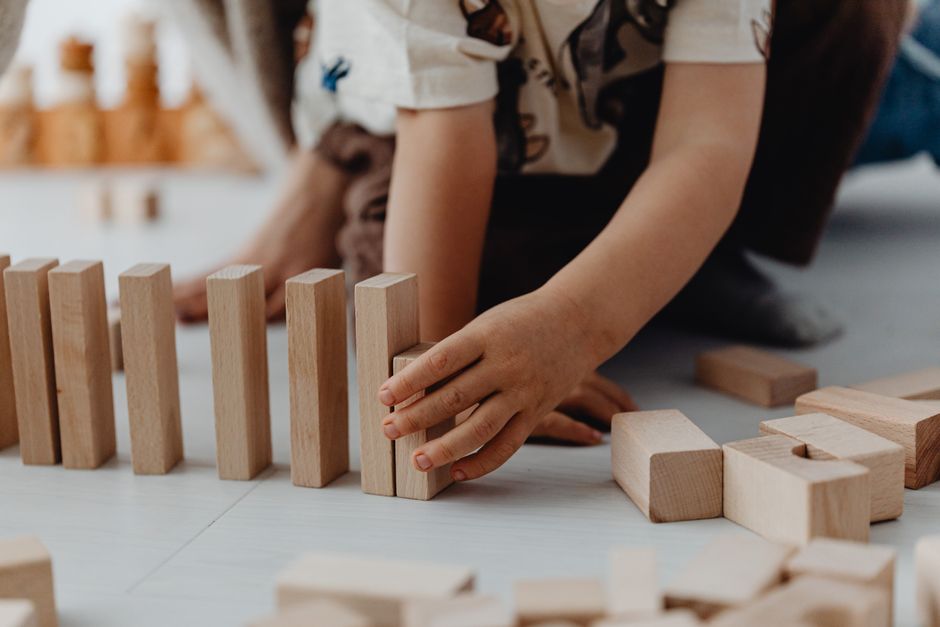
Bits and pieces that can be moved, stacked, and used in lots of different ways — like sticks, stones, buttons, blocks, cups, and boxes.
What Are Loose Parts?
Loose parts are simple, everyday things with no rules for how to use them. A pinecone could be food for a toy dinosaur, a tower block, or a pretend telephone. Because there’s no “right” way, children get to decide everything!
Why Do They Help the Brain?
When a child plays with loose parts, their brain is doing a LOT of work behind the scenes. They are:
- Imagining — turning a stick into a magic wand.
- Problem-solving — figuring out how to stack blocks so they don’t fall.
- Counting and sorting — lining up buttons by colour or size.
- Making choices — deciding what to build next.
All this thinking helps build strong connections inside the brain, a bit like adding new roads to a busy little city.
🤯 Whoa, Really?!
A young child’s brain makes more than a million new connections every single second! Play is one of the best ways to keep them growing.
Loose Parts Are Everywhere (and Free!)
The wonderful thing about loose parts is that you already have loads at home — no shopping required:
- From nature: sticks, stones, pinecones, leaves, shells, and seeds.
- From the recycling: cardboard boxes, kitchen-roll tubes, jar lids, corks, and egg cartons.
- From around the house: cups, wooden spoons, clothes pegs, scarves, blocks, and big buttons.
Fun fact: the idea even has a proper name. Back in 1971, an architect named Simon Nicholson came up with “loose parts theory” — the idea that the more bits and pieces there are to play with, the more creative children become.
The Hidden Skills in the Play
A basket of odds and ends might look simple, but it’s secretly teaching a whole toolbox of skills:
- Creativity — there’s no “right” answer, so imagination runs wild.
- Early maths & science — balancing a tower or sorting by size is real engineering and pattern-spotting.
- Language — children narrate whole adventures, growing their words and storytelling.
- Confidence & independence — they get to decide, which builds bold, capable little thinkers.
A Grown-Up’s Secret Job
Here’s the surprising part: the best thing a grown-up can do is step back. Offer the basket, then watch and wonder. Try not to say “do it this way” — instead ask, “Ooh, tell me about what you made!” A little bit of mess (and a little bit of wobble as a tower topples) is all part of the learning.
🧪 Try This: An Invitation to Play
Arrange a few loose parts in a tray with one gentle challenge card, like “Can you build the tallest tower?” or “Make a cosy home for a tiny toy.” Then sit back and watch the ideas fly!
How to Try It at Home
You don’t need fancy toys. Pop a few safe loose parts in a basket and let your child explore:
- Wooden blocks or building bricks
- Cardboard boxes and tubes
- Cups, spoons, and bowls
- Big buttons, pebbles, or shells (with a grown-up nearby)
Then step back and watch the magic. Try not to say “do it this way” — the best ideas come from the child!
🤔 Fact or Fib? — tap your guess!
A cardboard box can be a great toy for loose parts play.
There is only one correct way to play with loose parts.
Playing helps a child’s brain grow.
Frequently Asked Questions
Q: What exactly are loose parts?
Simple, movable bits and pieces with no fixed rules — sticks, stones, boxes, cups, blocks, buttons — that children can use however they imagine.
Q: What age is loose parts play for?
It suits babies to big kids — just match the size of the parts to what’s safe for your child.
Q: Isn’t it just making a mess?
A bit of mess is a sign of deep thinking! A tray or basket keeps it tidy, and children can help pack away.
Q: Do I need to buy special toys?
Not at all — the best loose parts are free things from nature, the recycling, or the kitchen drawer.
Q: How is it different from normal toys?
Most toys do one job; loose parts can be anything, so the child does the inventing — and that’s where the brain-building happens.
📚 Where we learned this (for curious grown-ups):
• NAEYC — Using Materials Creatively
• Community Playthings — The Learning in Loose Parts
• Research review — Loose Parts Play & Cognitive Development
The Big Idea
Loose parts play might look messy and simple, but it’s a powerful brain-builder. Every time a 5-year-old turns a box into a rocket, they’re practising thinking, creating, and dreaming — the very skills they’ll use for the rest of their lives.