When the days get short and the wind turns cold, something amazing happens in the sky. Flocks of birds rise up together, line up like little arrows, and fly far, far away. They are not lost. They know exactly where they are going — and they have done it before. This is called migration, and it is one of nature’s most wonderful journeys.
What Is Migration?
Migration is when animals travel a long way from one place to another, and then come back again. They do it at the same time every year, like clockwork. Birds do it. So do whales, butterflies, turtles, and even tiny fish. Imagine packing up your whole family and walking to a warmer house every winter — that is what these animals do, except they use their wings, fins, and feet instead of a car!
📖 Big Word: Migration
When animals travel a long way to find food or warmer weather, then come home again later.
Why Do Animals Go So Far?
The biggest reason is simple: dinner. When winter comes, the ground freezes, plants stop growing, and bugs hide away. Suddenly there is not much to eat. So animals travel to places that are warm and full of food. Some go to find a safe, cosy spot to have their babies. When you tell a little one about it, you can say it like this: “The animals are following the food and the sunshine.” That is the whole big idea in one sentence.
🌟 Did You Know?
A small seabird called the Arctic tern flies from the very top of the world all the way to the bottom — and back again — every single year. It sees more daylight than almost any other animal on Earth!
How Do They Find the Way?
This is the really magical part. Animals do not have maps or phones. Instead, they use the world around them. Many birds watch the sun in the day and the stars at night, just like sailors did long ago. Some can feel which way is north, a bit like a built-in compass inside their heads. Others remember the shape of rivers, coastlines, and mountains. Whales even listen to the sounds of the ocean. Bit by bit, all of these clues guide them safely to the right place.
A Trip They Take Together
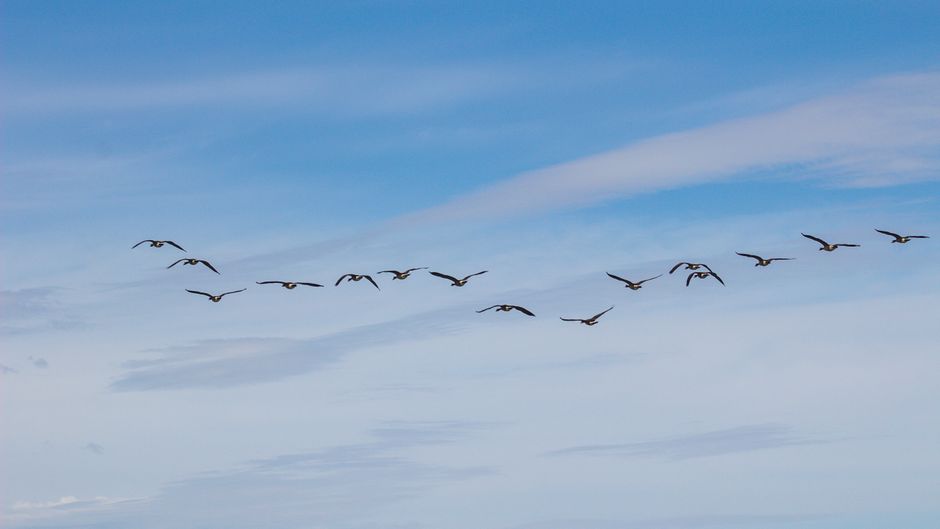
Migration is also a team adventure. Geese fly in a big “V” shape so they can take turns leading and resting. Young animals learn the path by following the grown-ups. When you watch a flock swirl across the sky, you are really watching a whole family travelling together, helping each other every flap of the way.
Amazing Migration Champions
Some animals take truly jaw-dropping journeys:
- 🐦 The Arctic tern flies from the very top of the world to the very bottom and back — about 70,000 km every year, the longest journey of any animal on Earth!
- 🦋 The monarch butterfly travels thousands of kilometres to Mexico each winter — and here’s the wildest part: no single butterfly makes the whole round trip. It takes several generations, and the ones flying south have never been there before!
- 🐢 Sea turtles swim across entire oceans and return to lay their eggs on the very same beach where they hatched.
- 🐋 Humpback whales swim thousands of kilometres between cold feeding seas and warm waters where they raise their babies.
📖 Big Word: Instinct
A “just-know-how” an animal is born with, without being taught — like a baby turtle knowing to head straight for the sea, or a young bird knowing when it’s time to fly south.
Nature’s Built-In Compass
How do animals find the way with no maps or phones? Amazingly, many of them can actually sense the Earth’s invisible magnetic field — like a compass built right into their bodies. Scientists call this special power magnetoreception. Animals mix it with clues from the sun and stars, remembered landmarks like rivers and coastlines, and even smells. Sea turtles can remember the exact “magnetic signature” of their home beach! Scientists are still unlocking exactly how it all works — it’s one of nature’s greatest mysteries.
Helping the Great Travellers
Because migrating animals travel such enormous distances, they need safe places to rest and refuel all along the way — special spots called “stopovers,” like wetlands, forests, and clean coastlines. When those places disappear, the whole journey gets much harder and more dangerous. We can all help by protecting wild places and keeping them clean and litter-free, so these incredible travellers can keep making their journeys, year after year.
Frequently Asked Questions
Q: What is migration?
When animals travel a long way — then back again — at the same time each year, usually to find food or warmer weather. The simplest way to say it: “they follow the food and the sunshine.”
Q: Which animal migrates the farthest?
The Arctic tern — it flies roughly 70,000 km a year, pole to pole and back, the longest migration of any animal.
Q: How do animals find their way?
They use the sun and stars, remember landmarks, and many can even sense the Earth’s magnetic field like a built-in compass.
Q: Do baby animals know how to migrate?
Often yes — it’s an instinct they’re born with. Young monarch butterflies find their way to Mexico having never made the trip before!
Q: How can we help migrating animals?
By protecting the wild “stopover” places where they rest and refuel — wetlands, forests, and clean coastlines — and keeping them litter-free.
📚 Where we learned this (for curious grown-ups):
• National Geographic — How Sea Turtles Navigate by Magnetic Field
• National Wildlife Federation — Monarch Butterfly Migration
• Smithsonian’s National Zoo — Migration Stopover Sites
The Big Idea
So the next time your little explorer points at birds in the sky, you can tell them the simplest, truest story: those animals are on a journey to find food and warm weather, and they will come home again when spring returns. Migration is nature’s way of saying that home is worth travelling for — even all the way around the world.