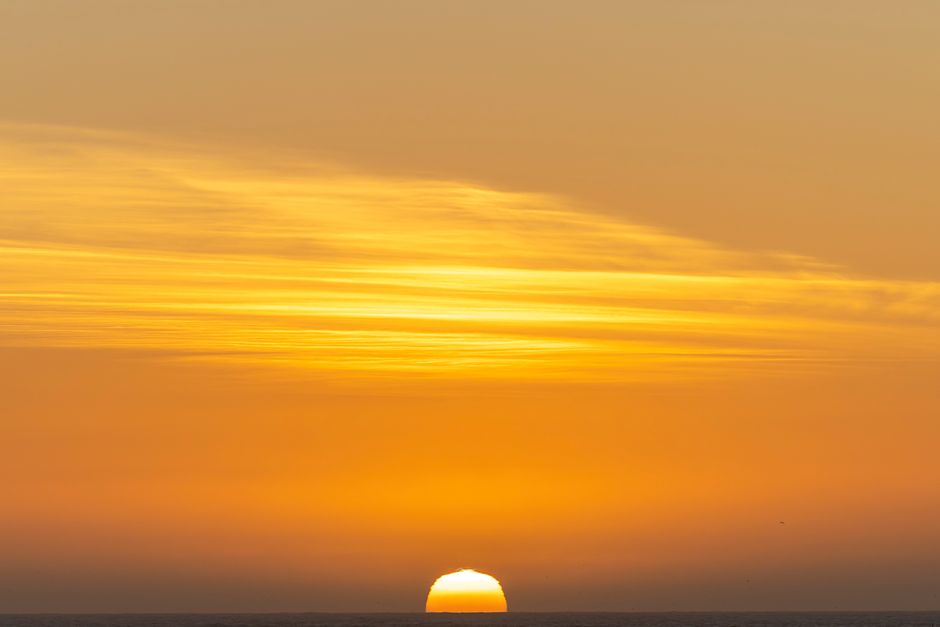
Every evening the Sun sinks lower, turns the sky orange and pink, and then—poof—it’s gone, and the stars come out. It really looks like the Sun packs up and leaves us for the night. But is that what truly happens? Let’s bust some night-time myths and find out where the Sun actually goes.
So What’s Actually True?
Here is the real secret: Earth is a giant ball that spins all the way around once every 24 hours. Imagine standing on a spinning playground roundabout with a bright lamp nearby. As you turn toward the lamp, light floods your face—that’s daytime. Keep turning, and your face swings away into shadow—that’s night-time. The lamp never moved. You did.
That is exactly what happens to you, your house, and your whole country every single day. In the morning your side of Earth turns to face the Sun, so it looks like the Sun is “rising.” In the evening your side turns away, and the Sun seems to “set.” It is one of the biggest tricks your eyes ever play on you!
🌟 Did You Know?
Earth spins surprisingly fast—at the middle, it turns faster than a jet plane flies. You can’t feel it because everything around you, even the air, is gently spinning along with you.
Earth’s Two Big Moves: Spin and Orbit
Our planet is a busy traveller — it’s always doing two things at once, and it’s easy to mix them up:
- 🔄 Rotation (the spin): Earth turns all the way around on its axis — the invisible line through the North and South Poles — once every 24 hours. This is what gives us day and night.
- ☀️ Orbit (the big loop): at the same time, Earth travels a giant circle around the Sun, taking about 365¼ days — and that’s what makes one whole year.
Tonight’s mystery is all about the spin. The orbit is a story for another day!
📖 Big Word: Rotation
Say it “roh-TAY-shun.” It means spinning around in place, like a top or a merry-go-round. Earth’s rotation — one full spin every 24 hours — is what makes day turn into night.
The Moving Line Between Day and Night
Because Earth is always spinning, there’s a line that sweeps around the planet where day meets night — sunset on one edge, sunrise on the other. Scientists even have a name for it: the terminator. This spinning is also why the world has time zones: when it’s lunchtime where you live, it’s the middle of the night for someone on the far side of Earth. And here’s a neat bonus — the Sun always seems to rise in the east because Earth spins towards the east, turning your part of the world to face the Sun each morning.
Why You Can’t Feel the Spin
Get ready for a wild number: near the middle of the Earth (the equator), you’re being whirled along at about 1,600 kilometres an hour — faster than a jet plane! So why don’t you feel dizzy or windswept? Because everything moves along with you at the same smooth, steady speed — you, your house, the air, even the oceans. It’s just like being a passenger on a super-gentle flight with no bumps and no turns, so it feels like you’re standing perfectly still. (Fun fact: the closer you live to the North or South Pole, the slower you spin — right at a pole you’d simply turn on the spot!)
🔍 Bust the Myth — Tap to Reveal!
Frequently Asked Questions
Q: Where does the Sun go at night?
Nowhere! The Sun keeps shining the whole time. Your part of Earth simply spins away from it, so its light can’t reach you for a while — that’s night.
Q: What is really moving, the Sun or the Earth?
The Earth. It spins (rotates) all the way around once every 24 hours, which makes the Sun only look like it rises and sets.
Q: What’s the difference between Earth’s rotation and its orbit?
Rotation is Earth spinning on its axis once a day (day and night). Orbit is Earth travelling around the Sun once a year (that’s a year!).
Q: Why doesn’t it feel like Earth is spinning?
Because everything — you, the air, the oceans — moves along at the same steady speed, like a smooth plane ride, so you can’t feel the motion.
Q: Why does the Sun rise in the east?
Because Earth spins towards the east, so your part of the world turns to face the Sun from that direction each morning.
📚 Where we learned this (for curious grown-ups):
• Britannica — How Fast Does Earth Spin?
• NASA Space Place — All About Earth
• NOAA Science On a Sphere — Planet Rotations
Now You Know!
The Sun never goes away, never switches off, and never hides. It is faithfully shining the whole time—you just spin out of its light each evening and back into it each morning. So tonight, when the sky goes dark, you can smile and think: “The Sun isn’t gone. I’m simply riding the spinning Earth into the shade for a while.”