Buckle up — when the days grow short and cold, millions of birds take off on journeys so long and so clever that scientists are still uncovering their secrets. How do they find their way without a single map, phone, or signpost? Get ready to be amazed.
Built-in Sun Compass
Many birds track the position of the Sun across the sky to keep flying in the right direction.
Star Maps at Night
Some birds fly after dark and use the patterns of the stars to steer, just like sailors once did.
Earth’s Magnetic Pull
Birds can sense the Earth’s magnetic field — an invisible force — and use it like a hidden compass.
Landmark Memory
Older birds remember rivers, coastlines, and mountains and follow them like a giant road map.
Why Do They Leave at All?
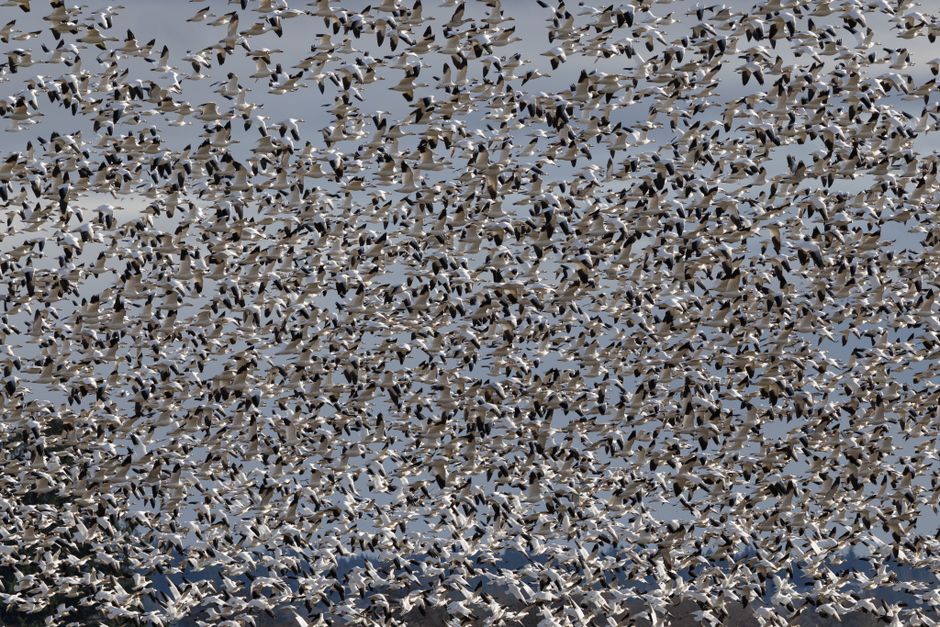
Birds do not fly south because they are cold — their feathers keep them cosy. They leave to chase food. In winter, insects vanish and seeds get buried under snow, so birds travel to warmer places where dinner is still easy to find. When spring returns and food comes back, they make the long trip home again.
How Do Babies Know the Way?
Here is the truly astonishing part: some young birds make their very first migration completely alone, without any grown-ups to follow. Scientists think the route is partly built into them from birth — like being born already knowing which direction to go and roughly how far. They combine that instinct with the Sun, stars, and magnetic clues to find their way.
🤯 Whoa, Really?!
The Arctic Tern makes one of the longest journeys of any animal, flying between the top and bottom of the planet. Over its whole life, the distance it travels can add up to roughly the same as flying to the Moon and back several times!
Teaming Up for the Trip
You may have seen geese flying in a neat V shape. This is a clever trick! Each bird rides in the gentle swirl of air left by the one in front, which makes flying less tiring. They take turns leading at the hard front spot, so the whole flock can travel much farther together than any single bird could alone.
The Word for the Great Journey: Migration
These amazing trips have a name: migration — a regular, seasonal journey animals make to find food, warmth, or a safe place to raise their babies. Not every bird migrates (the tough ones that stay all winter are called residents), and the distances vary hugely, from a short hop down a mountainside to enormous ocean crossings. The record is jaw-dropping: a young bar-tailed godwit once flew about 13,500 kilometres NON-STOP from Alaska to Australia — an eleven-day flight with no landing, no food, and no sleep. It’s the longest non-stop journey ever measured for any animal!
📖 Big Word: Migration
Say it “my-GRAY-shun.” It’s a regular journey animals make from one place to another and back again, usually with the seasons, to find food or a good place to raise young.
How Do They Know WHEN to Go?
If birds have no calendars, how do they know it’s time? The secret signal is the shortening days. As daylight gets a little shorter each autumn, a bird’s body senses the change and starts to get ready. It develops a jittery, restless feeling — scientists even have a fun German word for it, Zugunruhe (say “TSOOG-oon-roo-uh”), meaning “migration restlessness.” At the same time, the bird eats and eats to store fat as fuel, sometimes almost doubling its weight before the big flight. So it’s really the changing length of the days — not just the cold — that tells a bird it’s time to fly.
How We Know Their Secrets — and How You Can Help
So how did scientists learn all this? They fit birds with feather-light tracker tags and follow them by satellite, and gently place tiny numbered rings on their legs (called bird banding). These tricks revealed wonders like the tiny ruby-throated hummingbird that crosses the Gulf of Mexico — about 800 kilometres non-stop over open water! You can help migrating birds too:
- 🌙 Turn off outdoor lights at night. Most birds migrate in the dark, and bright city lights can confuse them.
- 🌻 Plant native flowers and leave out feeders and water — a safe rest stop for tired travellers.
- 🐱 Keep pet cats indoors, especially during spring and autumn migration.
🧠 Quick Quiz — tap an answer!
1. Why do most birds fly somewhere warmer for winter?
2. What invisible force can birds sense to help them steer?
3. Why do geese fly in a V shape?
Frequently Asked Questions
Q: Why do birds fly away in winter?
Mostly to find food. In winter insects vanish and seeds get buried, so many birds travel to warmer places where dinner is easier to find, then return in spring.
Q: What is migration?
A regular seasonal journey animals make from one place to another and back again, to find food, warmth, or a safe place to raise their young.
Q: How do birds know when it’s time to go?
They sense the days getting shorter. That triggers a restless feeling (called Zugunruhe) and makes them eat lots of extra food to store fat as fuel for the flight.
Q: How do birds find their way?
They use a Sun compass by day, star patterns at night, a built-in sense of Earth’s magnetic field, remembered landmarks, and an inborn instinct for the right direction.
Q: How can I help migrating birds?
Turn off outdoor lights at night, plant native flowers, keep feeders and water out, and keep pet cats indoors during migration seasons.
📚 Where we learned this (for curious grown-ups):
• Cornell Lab of Ornithology — The Basics of Bird Migration
• USGS — Bar-Tailed Godwit Sets Non-Stop Flight World Record
• Audubon — Lights Out for Birds (How to Help)
Keep Looking Up!
Next time you spot a flock streaking across an autumn sky, remember what those tiny travellers are carrying inside them: a Sun compass, a star map, a magnetic sense, and a memory of the land below. No phones, no maps — just incredible bodies built for one of nature’s greatest adventures.