Lots of grown-ups think a child only learns to be kind from other people. But guess what? Soft fur, wagging tails, and tiny purrs can teach big lessons about feelings too! Let’s bust a few myths about animals and empathy.
So What’s Actually True?
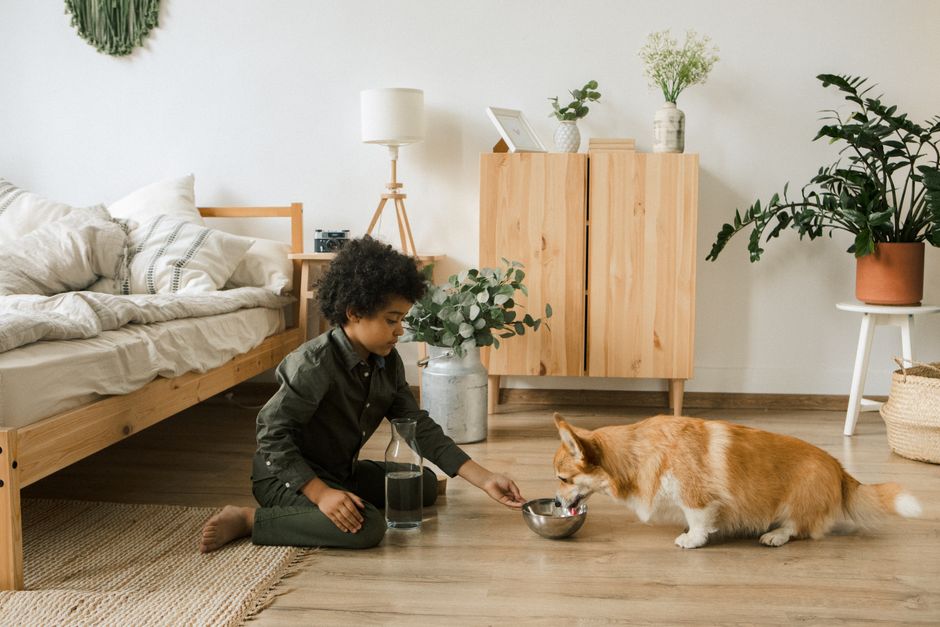
When children spend time with friendly animals, they learn to slow down, watch carefully, and think, “How does my friend feel right now?” That same question helps them be gentle with a baby brother, share with a classmate, or comfort a sad friend. Animals give kids a safe, happy way to practice the biggest superpower of all: caring.
How Animals Show Their Feelings
Animals can’t use words, so they “talk” with their bodies. Learning to read them is a real empathy superpower:
- Dogs: a loose, wiggly body and a play-bow (front down, bottom up) means “let’s play!” But ears flat back, a stiff body, or a growl means “I’m scared — please give me space.” A wagging tail can mean excited or nervous, so always look at the whole dog.
- Cats: a soft purr and a slow blink are a cat’s way of saying “I feel happy and safe.” A puffed-up tail and flattened ears mean “I’m frightened — leave me be.”
- Rabbits: a happy bunny flops down to relax, while a hard thump of the back foot is its alarm signal.
Gentle Rules for Making Animal Friends
Kindness keeps both of you safe and happy. Follow these golden rules:
- Always ask the owner first before touching an animal you don’t know.
- Let it sniff your hand and come to you — don’t rush over or stare into its eyes.
- Stroke gently on the chest or side, not on top of the head, and keep your voice soft and quiet.
- Never disturb an animal that’s eating or sleeping, and don’t hug tight, pull tails, or chase.
- Give it space to walk away if it wants to — and wash your hands afterwards.
🧪 Try This: The Feelings Detective
Watch a pet (or a bird in the garden) for one whole minute. Can you guess how it’s feeling — playful, sleepy, hungry, or a little worried? What clues gave it away?
How Pets Help You Grow
Spending gentle time with animals does more than fill your heart with warm fuzzies. Helping to fill a water bowl or brush soft fur teaches responsibility. Watching for an animal’s feelings builds empathy and patience. And a calm, cuddly pet can make a worried child feel braver and comforted. Studies have even found that children who care for animals often grow more caring, confident, and kind toward people too.
🌟 Did You Know?
Many animals feel calmer when someone is gentle and quiet near them — just like you feel cosy with a soft voice and a warm hug.
🤔 Fact or Fib? — tap your guess!
A wagging tail always means a dog is happy.
Speaking in a soft, calm voice helps an animal feel safe.
You should hug a strange animal as tight as you can.
Frequently Asked Questions
Q: What is empathy?
The power to notice and feel what someone else — a person or an animal — is feeling.
Q: Can young children really learn empathy from pets?
Yes! Even 4- and 5-year-olds notice when an animal is scared or happy, and caring gently helps that kindness grow.
Q: How do I know if a dog is scared?
Look for ears flat back, a stiff body, a tucked tail, or a growl — that means “please give me space.”
Q: What’s the safest way to meet a new animal?
Ask the owner first, let it sniff your hand, and stroke gently on the chest — never hug or grab a strange animal.
Q: Do I need a pet at home to learn this?
Not at all — you can practise by kindly watching birds, a friend’s pet, or animals at the park.
📚 Where we learned this (for curious grown-ups):
• American Kennel Club — How Children Benefit From Having a Dog
• American Kennel Club — How to Safely Greet a Dog
• RSPCA — Children & Dogs
Now You Know!
Animals aren’t just cuddly — they are wonderful little teachers of kindness. Next time you meet a gentle pet, watch closely, move slowly, and ask yourself how your furry friend feels. That’s empathy growing right inside you!