Animals get hungry and grab a snack — but have you ever seen a tree wander off to find lunch? Plants never eat a single bite, yet they grow from a tiny seed into something taller than your house. So how do they do it? The amazing answer is that plants catch sunlight and turn it into food. Let’s follow the question, step by step.
So how can sunlight be food?
Inside every green leaf are millions of tiny food factories. They take three free ingredients — sunlight from the sky, water from the soil, and a gas called carbon dioxide from the air — and mix them together. Out of that mix, the leaf builds a kind of sugar. That sugar is the plant’s meal: its energy to grow, make flowers, and stay alive. The whole clever trick has a name: photosynthesis.
📖 Big Word: Photosynthesis
It sounds tricky, but it just means “making things with light.” Photo means light and synthesis means putting together. Plants put light, water, and air together to make food!
But why are leaves green?
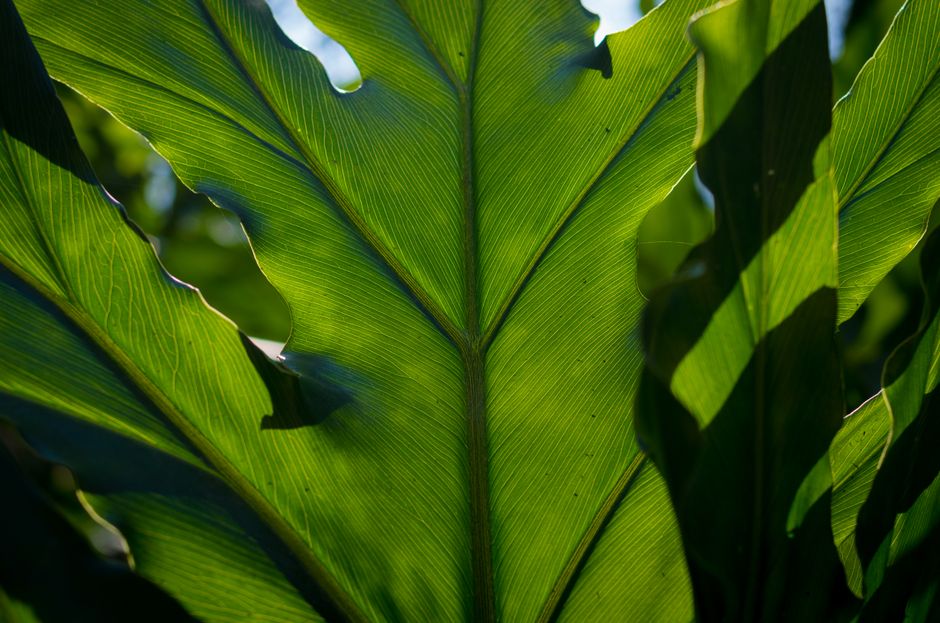
Leaves are packed with a special green colouring called chlorophyll, and chlorophyll is the part that actually catches the sunlight. Here’s the surprising bit: it grabs the red and blue light from the Sun but bounces the green light away. That bounced-back green light is exactly what travels to your eyes — which is why a leaf looks green to you!
Then what does the plant breathe out?
When a plant makes its food, it doesn’t use up all the air it takes in. It puffs out a leftover gas — oxygen — the very gas you and I need to breathe. So every time you take a breath, you can thank a plant somewhere for making it. Trees, grass, and even the seaweed in the ocean are quietly refilling the planet’s air all day long.
🤯 Whoa, Really?!
A big leafy tree can make enough oxygen in a single day to keep several people breathing. Forests are like giant air machines for the whole world!
So what happens when the Sun goes down?
No sunlight means the food factories pause for the night — you can’t make “light food” in the dark! But that’s fine, because plants store some of the sugar they made during the day, a bit like packing leftovers. They live off those stored snacks until the Sun rises and the leaves get busy all over again.
Where the Ingredients Come From: Roots, Leaves & Tiny Doors
So how do the three ingredients actually reach the leaf? Each one takes a different route:
- 💧 Water is slurped up from the soil by the plant’s roots, then travels all the way up the stem to the leaves.
- 🌬️ Carbon dioxide floats in through hundreds of teeny holes on the leaves called stomata — tiny doors that open and close.
- ☀️ Sunlight is caught by the green chlorophyll, tucked inside little packets in the leaf.
The leaf mixes them all together, makes a sugar called glucose, and pipes it around the plant to feed every root, branch, and flower.
📖 Big Word: Stomata
Say it “STOH-muh-tuh.” These are the tiny holes (mostly on the underside of a leaf) that let carbon dioxide in and oxygen out — like microscopic doors that open and close. Just one is called a stoma.
Why Photosynthesis Is the Most Important Trick on Earth
Plants are called producers because they make their own food out of sunlight — and almost every living thing depends on them! A caterpillar eats a leaf, a bird eats the caterpillar, a fox eats the bird — so the Sun’s energy the plant captured flows all the way up the food chain. In fact, nearly every meal you eat traces back to a plant catching sunlight. And plants do double duty: they hand us the oxygen we breathe and soak carbon dioxide out of the air. (Even the coal and oil we burn today is really ancient sunlight, stored inside plants millions of years ago!)
Not Just Green: The Secret Colours in Leaves
Here’s a lovely surprise: leaves have other colours hidden inside them all year — yellows and oranges — but the strong green chlorophyll usually covers them up. In autumn, as the days grow short and cool, trees stop making chlorophyll and pull it back in to save it. As the green fades away, the hidden yellows and oranges finally shine through — and some trees even make brand-new reds and purples. That’s the secret behind the beautiful colours of autumn leaves. The green was just hiding a rainbow all along!
🔍 Tap to Reveal the Answer!
Frequently Asked Questions
Q: How do plants make food from sunlight?
Inside green leaves, chlorophyll catches sunlight and uses it to mix water and carbon dioxide into a sugar called glucose. This trick is called photosynthesis.
Q: Where do the ingredients come from?
Water comes up from the soil through the roots, carbon dioxide comes in through tiny leaf holes called stomata, and sunlight is caught by the green chlorophyll.
Q: Why are plants so important?
They’re producers — they make food from sunlight that feeds the whole food chain — and they give us the oxygen we breathe while soaking up carbon dioxide.
Q: Why do leaves look green?
Chlorophyll soaks up red and blue light but bounces green light back to your eyes, so leaves look green.
Q: Why do leaves change colour in autumn?
Trees stop making green chlorophyll, so it fades and reveals the yellow and orange colours that were hidden underneath all along.
📚 Where we learned this (for curious grown-ups):
• Smithsonian Science Education Center — What Is Photosynthesis?
• Britannica — How Plants Feed the Food Chain (Producers)
• Smithsonian — Why Do Leaves Change Colour in Autumn?
Now You Know!
Plants don’t chew or swallow — they catch sunshine and cook it into sugar, then hand us fresh air as a thank-you. Next time you walk past a tree, remember: it’s a silent, green, sunlight-powered chef. Pretty amazing for something that never moves a muscle!