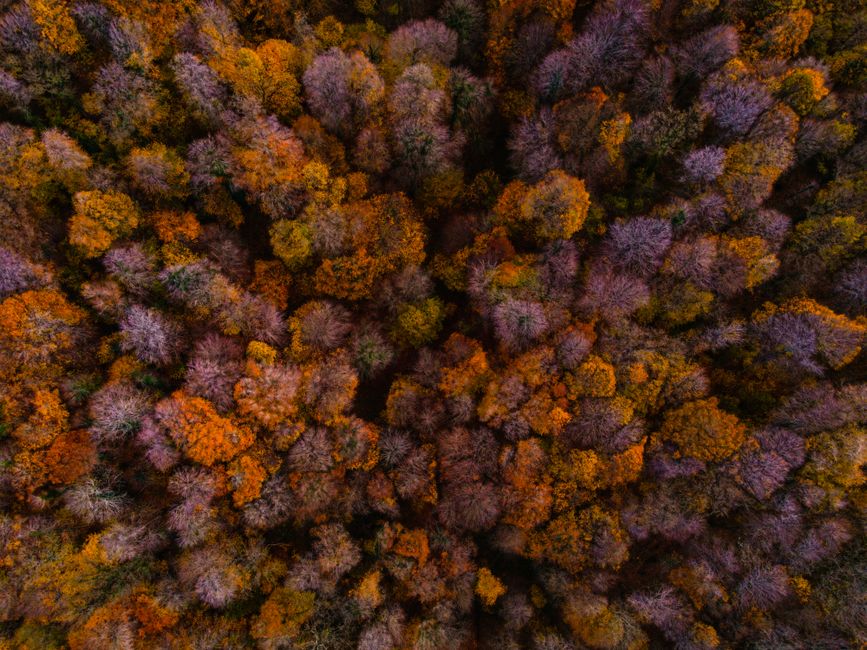
Every autumn, trees put on a colourful show—leaves turn gold, orange, and fiery red before they flutter to the ground. People have told all sorts of stories about why this happens. Some of those stories sound true but aren’t! Let’s play detective and bust a few leafy myths.
Let’s Bust Some Myths
So What’s Actually True?
All spring and summer, leaves are packed with a green colour called chlorophyll. This is the part that catches sunlight and turns it into food for the tree—a bit like the tree’s own kitchen. There is so much green that it covers up every other colour.
When autumn arrives, the days get shorter and the nights get cooler. The tree senses winter is coming, so it slowly stops making chlorophyll. As the green fades away, the colours that were always there—yellow and orange—finally get to shine. Some trees even make a brand-new red colour as a last burst before the leaf drops.
Meet the Colour Crew
Every leaf is home to a tiny team of colour-makers called pigments. Once you know the crew, the whole autumn mystery makes sense:
- Chlorophyll (green) — the busy chef. It catches sunlight and cooks food for the tree all summer. There’s so much of it that green hides everyone else.
- Carotenoids (yellow & orange) — the shy ones. They’re in the leaf the whole time, just hidden under the green. They’re the very same colour-makers that turn carrots orange and corn yellow!
- Anthocyanins (red & purple) — the new arrivals. Unlike the others, these are freshly made in autumn when leftover sugar gets trapped inside the leaf on cool, sunny days.
📖 Big Word: Pigment
A pigment is something that gives a colour. Leaves, carrots, and even your eyes get their colour from pigments!
Why the Best Reds Need Perfect Weather
Have you noticed some autumns are far more colourful than others? The most dazzling reds appear after a run of warm, sunny days and cool, crisp nights (but not freezing). On sunny days the leaf makes lots of sugar, and the chilly nights trap that sugar inside — and trapped sugar is exactly what the tree turns into those fiery red anthocyanins. Too much rain, or an early hard frost, and the show is quieter that year.
Why Do Leaves Fall Off at All?
Once a leaf has done its summer job, the tree gets ready for winter by building a tiny cork-like wall where the leaf meets the branch. This slowly cuts off the leaf’s water and food, so the leaf finishes its colour show and gently drops. Losing leaves saves the tree precious water and energy through the frozen months. Trees that do this are called deciduous. Evergreens, like pines and firs, keep their tough, waxy needles all year instead.
🌟 Did You Know?
Different trees wear different autumn colours! Maples blaze red and orange, birches and aspens glow golden yellow, and many oaks turn a deep brown or russet red.
Try This: Become a Leaf Detective
On your next autumn walk, collect a handful of leaves and sort them into piles by colour. Can you find a leaf that’s two colours at once — green fading into gold? That leaf is caught in the act, with its chlorophyll stepping aside right before your eyes. Pop your favourites between two sheets of paper under a heavy book to press and keep them!
🌟 Did You Know?
Trees drop their leaves to save energy and water through the cold winter. In spring, fresh green leaves grow back and the whole cycle starts again!
🔍 Bust the Myth — Tap to Reveal!
Frequently Asked Questions
Q: What actually makes a leaf green?
A pigment called chlorophyll, which catches sunlight to make food for the tree.
Q: Where do the yellow and orange colours come from?
They were in the leaf all along (as carotenoids) — you just couldn’t see them until the green faded.
Q: Why are some leaves red?
Red comes from anthocyanins, which are freshly made in autumn from sugar trapped in the leaf on cool, sunny days.
Q: What triggers the change?
Mostly the shorter days — longer nights tell the tree that winter is on the way.
Q: Why don’t pine trees change colour?
Evergreens keep their waxy needles all year instead of dropping them, so they stay green.
📚 Where we learned this (for curious grown-ups):
• US Forest Service — The Science of Fall Colors
• SUNY-ESF — Why Leaves Change Color
• Smithsonian — Why Do Leaves Change Color in the Fall?
Now You Know!
Frost doesn’t paint leaves, and the wind doesn’t blow colours in. The autumn colours were inside the leaves the whole time—waiting for the green to step aside. Next time the trees turn gold and red, you can be the one who knows the real reason behind nature’s most colourful magic trick!