Buckle up — the grass under your feet is running a tiny green factory, and the colour you see is actually the leftover light it didn’t want! Every blade is packed with a magical green ingredient that catches sunshine and turns it into food. Let’s zoom in on four jaw-dropping facts.
It’s the Green Stuff
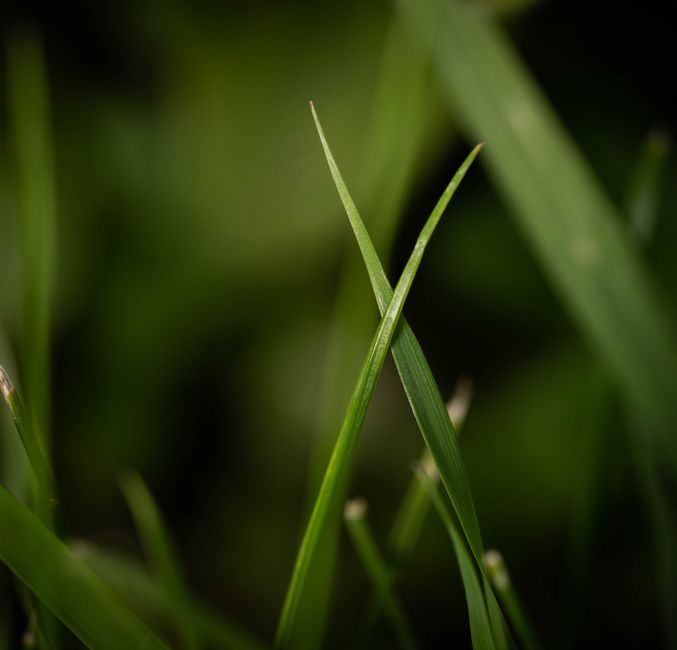
A pigment called chlorophyll fills every blade and gives grass its colour.
Green Is the Reject
Chlorophyll drinks up red and blue light but bounces green light back to your eyes.
Sunlight Becomes Food
Grass uses light, water & air to cook its own sugary meal — that’s photosynthesis.
It Breathes Out Oxygen
While making food, grass puffs out the very oxygen we need to breathe.
Why Green and Not Pink or Blue?
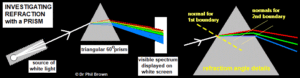
Sunlight looks plain white, but it is secretly a mix of every rainbow colour bundled together. When light hits a blade of grass, the chlorophyll inside acts like a fussy eater. It gobbles up the red and blue parts of the light to power its food-making, but it has no use for green — so it pushes the green light straight back out. That bounced-away green is exactly what travels into your eyes. In other words, grass is every colour except the one you see!
📖 Big Word: Chlorophyll
Say it “KLOR-uh-fill.” It is the green colouring inside plants that catches sunlight so the plant can make food.
The Secret Food Factory
Inside each blade, chlorophyll mixes sunlight with water sucked up from the roots and a gas called carbon dioxide pulled from the air. It blends them into sugar, the plant’s energy snack. This clever trick is why grass, trees and tiny weeds can grow without ever visiting a shop. And here’s the best part for us: every time a plant makes its food, it releases fresh oxygen as a leftover — the same oxygen filling your lungs right now.
The Recipe for Grass Food
Making food from sunlight has a big science name: photosynthesis (say it “foto-SIN-thuh-sis”). Like any recipe, it needs just a few ingredients — and grass gathers every one of them for free:
- ☀️ Sunlight — caught by the green chlorophyll.
- 💧 Water — slurped up through the roots.
- 💨 Carbon dioxide — a gas breathed in from the air.
Mix them together and the blade makes sugar (its energy snack) — with fresh oxygen puffed out as the leftover. Sunlight in, food and clean air out. Not bad for something you mow on a Saturday!
📖 Big Word: Photosynthesis
The clever trick plants use to turn sunlight, water and air into their own food. “Photo” means light and “synthesis” means putting together — so it means “putting food together using light.”
Why Plants Are the Real Superheroes
Here’s something amazing: almost every living thing depends on this little green trick. Grass feeds the rabbits and cows; those animals feed other animals; and the sugar a plant makes is the very start of nearly every food chain on Earth. Even the burger, the apple, and the glass of milk on your table trace back to a plant catching sunshine. On top of that, plants hand us the oxygen we breathe. Green plants really are the planet’s hardest-working heroes!
Not Every Plant Is Green!
Some leaves are red, purple, or almost black — think of red cabbage or a purple maple tree. They still have green chlorophyll hidden inside doing its food-making job, but they also carry extra colour pigments that are strong enough to cover the green up. It’s the same reason autumn leaves change: once the green fades, the other colours that were there all along finally get to show off.
🔎 Try This: The Sunlight Test!
Lay a small square of cardboard flat on a patch of lawn and leave it for about a week (ask a grown-up first). When you lift it, the grass underneath will have turned pale and yellowy! With no sunlight, it couldn’t make its green chlorophyll. Take the cardboard away and, in a few sunny days, the green comes right back. Living proof that grass needs light to stay green.
🤯 Whoa, Really?!
In autumn, many leaves turn red, orange or gold. Those colours were hiding the whole time! When the chlorophyll fades away, the other pigments finally get their moment to shine.
🧠 Quick Quiz — tap an answer!
1. What is the green stuff inside grass called?
2. Why does grass look green to our eyes?
Frequently Asked Questions
Q: Why is grass green?
Because it’s full of a green pigment called chlorophyll. Chlorophyll soaks up the red and blue parts of sunlight and bounces the green part back to your eyes.
Q: What is chlorophyll?
It’s the green colouring inside plants that catches sunlight so the plant can make its own food.
Q: What is photosynthesis?
The way plants mix sunlight, water, and air to make sugar for food — puffing out oxygen for us to breathe as a bonus.
Q: Why do leaves change colour in autumn?
The green chlorophyll fades away, letting the red, orange, and gold pigments that were hiding underneath finally show.
Q: Do plants really make the air we breathe?
Yes! Every time a plant makes food, it releases fresh oxygen — the same oxygen filling your lungs right now.
📚 Where we learned this (for curious grown-ups):
• Britannica — Why Is Grass Green?
• Britannica — Why Are Plants Green? (Chlorophyll & Colour)
• NASA Science — Plants, Chlorophyll & Photosynthesis
Keep Looking Down!
Next time you flop onto a lawn, remember you are lying on millions of busy little factories, each one catching sunshine, bouncing green light into your eyes and breathing out the air you need. The world is full of hidden wonders — sometimes you just have to look very closely to spot them!