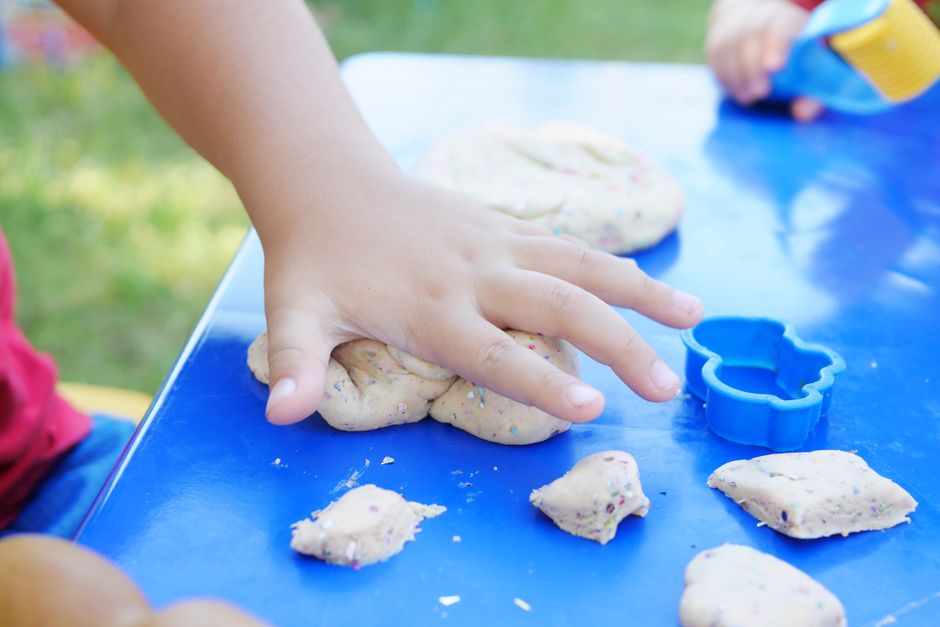
Maya squished a ball of playdough flat, rolled it into a snake, then pinched tiny spikes all along its back. Her tongue poked out in concentration. She didn’t know it, but those busy little fingers were quietly training for something big — the day she’ll pick up a pencil and write her very own name.
What Are Fine Motor Skills?
Fine motor skills are the small, careful movements we make with our hands and fingers — pinching, twisting, threading, squeezing and pressing. They’re different from the big movements of running and jumping. Holding a pencil and forming neat little letters is one of the trickiest fine-motor jobs of all, which is why hands need lots of gentle practice first.
📖 Big Word: Dexterity
This means how nimble and skilful your fingers are. The more a child plays with their hands, the more dexterity they build.
Why Strong Little Hands Matter for Writing
Writing looks simple, but it asks a lot of a small hand all at once. The fingers must grip the pencil just firmly enough, the wrist must stay steady, and the eyes must guide every curve and line. If the muscles in the hand are still weak, writing feels tiring and frustrating — a bit like asking someone to run a race before their legs are ready.
That’s the magic of play. Long before a child writes a single letter, everyday games are secretly building the exact strength and control that good handwriting needs. The hand gets ready through fun, not through worksheets.
How Playful Games Get Hands Ready
The wonderful news is that the best practice doesn’t look like practice at all. Squishing and rolling playdough builds hand strength. Threading big beads onto a string sharpens the careful grip between thumb and finger — the very same grip used to hold a pencil. Picking up cotton balls with kitchen tongs, peeling stickers, doing up buttons, snipping paper with safe scissors and posting coins into a piggy bank all give those small muscles a happy workout.
Even messier fun counts. Drawing in a tray of dry rice, popping bubble wrap, building with small blocks and painting with a chunky brush all teach fingers to move with purpose. Each game adds a little more strength and a little more control, one giggle at a time.
🌟 Did You Know?
Squeezing a sponge or a ball of dough works the same hand muscles a child will one day use to grip a pencil for hours at school. Play really is practice in disguise.
The Building Blocks Before the Pencil
Here’s something surprising: a child’s body gets ready to write from the middle outwards. First they need a strong core and steady shoulders (to sit up tall and hold the arm still), then good wrist control, and finally those tiny, precise finger movements. One of the most important is the pincer grasp — picking up small things between the thumb and pointing finger, which babies first master around their first birthday. That very grip slowly grows into the way we hold a pencil!
📖 Big Word: Pincer Grasp
Say it “PIN-ser.” It’s pinching a small object between your thumb and pointer finger — like picking up a single raisin or a bead. It’s the very same grip used to hold a pencil!
How Pencil Grip Grows Up
Little ones don’t start out holding a pencil neatly — and that’s completely normal! The grip matures in stages. First a child grabs the crayon in a whole fist, scribbling with big arm movements. Next they hold it with their fingers pointing down the pencil. Finally comes the mature “tripod grip” — the pencil balanced on just three fingers (thumb, index, and middle) — which most children settle into between about ages 4 and 6. So if a young child’s grip looks a bit funny, don’t worry: it just needs time and lots of playful practice to grow up.
Everyday Ways to Build Hand Power
Here’s a handy toolbox of games, sorted by the skill they build:
- 💪 Strength: squish playdough, squeeze a wet sponge or a spray bottle, pop bubble wrap.
- 🤏 Pinch grip: thread beads, pick up pompoms with tweezers or tongs, peel stickers, post coins into a jar.
- ✏️ Control: “draw” in a tray of dry rice, do lacing cards, build with small bricks, snip with safe scissors.
A tip for grown-ups: playing on a vertical surface — an easel, or paper taped to the wall — builds extra wrist and shoulder strength. Offering short, broken crayons naturally nudges little fingers into that tripod grip. Keep it playful, skip the worksheets, and if you’re ever worried about a child’s hand skills, an occupational therapist can help.
Frequently Asked Questions
Q: What are fine motor skills?
The small, careful movements of the hands and fingers — pinching, threading, squeezing, and pressing — that a child needs for jobs like holding a pencil.
Q: How do fine motor skills help with writing?
Writing needs hand strength, a steady wrist, and precise finger control. Playful hand games build all of that long before the first letter is written.
Q: What is a tripod grip?
The mature way to hold a pencil — balanced on three fingers (thumb, index, middle). Most children settle into it between about ages 4 and 6.
Q: My child holds the pencil in a fist — is that a problem?
Not at all — a fisted grip is a normal early stage. It matures with time and plenty of hand play.
Q: What games build strong little hands?
Playdough, threading beads, tongs and tweezers, lacing cards, safe scissors, and drawing in rice — all fun, all great practice.
📚 Where we learned this (for curious grown-ups):
• Understood.org — All About Fine Motor Skills
• CDC — Developmental Milestones (Hand & Finger Skills)
• Understood.org — How Occupational Therapists Help With Motor Skills
The Big Idea
You don’t need to rush a young child toward writing. Give them playdough to squish, beads to thread and tongs to pinch, and their hands will grow strong and clever all on their own. By the time the pencil arrives, those busy little fingers will already be ready — and the very first letters will feel like just one more brilliant game.