Once upon a story, a little girl tapped out a song on a tiny drum — tap, tap, tap-tap-tap. She wasn’t thinking about numbers at all. But deep inside her head, her brain was quietly learning to count beats, spot patterns, and keep a steady rhythm. And those very same skills, it turns out, are also the secret tools of a math whiz.
It sounds like magic, but it’s really science: when young children learn music, they often grow stronger at math too. Let’s find out why.
Music Is Full of Hidden Numbers
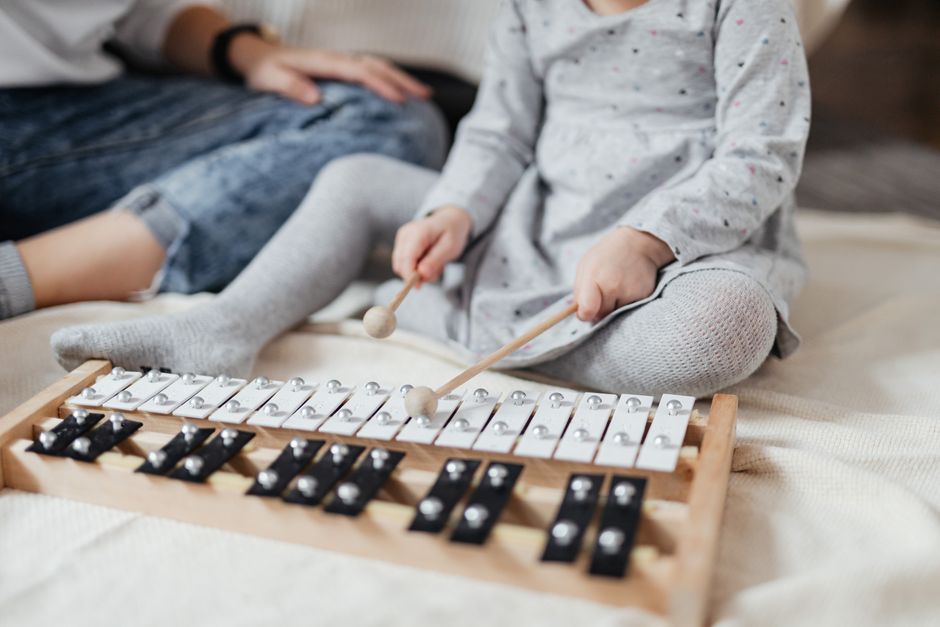
Every song is built from counting, even when nobody says a number out loud. A drumbeat goes one–two, one–two. A clapping game has a steady pulse. When you sing “hold this note for two beats,” you are doing a little bit of math with your ears. Children who play music are practising counting and timing again and again — and they think it’s play, not work.
Patterns Are the Bridge
Here is the big idea. Math is really the study of patterns — the way numbers and shapes repeat in tidy, predictable ways. And music is bursting with patterns: a tune that goes up and then comes back down, a beat that repeats, a chorus that returns after every verse. When a child’s brain gets good at noticing musical patterns, that same pattern-spotting power helps them see how numbers fit together too.
🌟 Did You Know?
When you hold one note for the same time as two shorter notes, you’ve just felt a fraction — like ¼ and ½ — without any pencils or paper!
A Brain That Grows With Practice
Your brain is a bit like a muscle: the more you use a part of it, the stronger it gets. Playing music asks a lot of the brain all at once — you listen, you keep time, you move your fingers, and you remember what comes next. All that busy practice helps build strong pathways for focusing and remembering. Later, when the same child sits down to solve a math puzzle, those well-exercised pathways are ready and waiting to help.
📖 Big Word: Rhythm
Rhythm is the pattern of long and short beats in music — the part that makes you want to clap or tap your foot in time.
It’s Not About Being “Good” Yet
You don’t need to play a song perfectly to get the magic. A four-year-old banging a steady beat on a pot, shaking a shaker, or singing a counting song is already giving their brain a wonderful workout. The fun and the trying are what matter most, not getting every note exactly right.
What the Research Really Shows
Scientists who study children have found that learning music is linked with all sorts of thinking benefits — better memory, sharper listening, stronger language, and quicker pattern-spotting. Does it magically turn a child into a maths genius? Not quite — the science on that is honestly a bit mixed. But here’s what’s clear and exciting: music and maths use many of the same brain skills — counting, keeping time, spotting patterns, and paying close attention. So when a child practises music, those shared skills get a real workout that can help with numbers too.
📖 Big Word: Pattern
Something that repeats in a predictable way — a beat or a chorus in music, and numbers or shapes in maths. Getting good at spotting patterns is a superpower for both!
Music Warm-Ups That Sneak In Maths
You can grow those shared skills with simple, giggly games:
- 👏 Clap-and-count: clap a steady beat while counting 1–2–3–4, again and again.
- 🔁 Copy-the-rhythm: tap out a pattern and have your child echo it back — then take turns inventing trickier ones.
- 🔢 Counting songs: “Five Little Ducks” or “Ten in the Bed” sing numbers up and down.
- ↕️ Play with opposites: loud/soft and fast/slow build listening and comparing.
- 🥁 Make a homemade band: rice shakers, pot drums, and rubber-band “guitars” — then keep a beat together.
For Grown-Ups: Keep It Playful
Good news — you don’t need to be musical yourself or own a single instrument! Sing in the car, clap out rhythms, dance around the kitchen, or tap on pots and pans. Cheer the effort and the fun, not the “right” notes. Little musical moments sprinkled through everyday life do more good than rare, formal lessons — and they build joy, focus, confidence, and a friendly first taste of numbers and patterns.
Frequently Asked Questions
Q: Does music really make children better at maths?
Music is linked with several thinking benefits, and it shares key skills with maths — counting, timing, and patterns. It’s not a guaranteed magic boost, but practising music gives those shared skills a great workout.
Q: How are music and maths connected?
Both are full of patterns and counting. A beat, a rhythm, and note lengths are really little bits of maths you feel with your ears.
Q: Is there maths hidden in music?
Yes — holding one note as long as two shorter notes is a fraction (½ and ¼), felt without any pencils or paper!
Q: Does my child need to play well to benefit?
Not at all. A toddler banging a steady beat on a pot is already giving their brain a wonderful workout. The trying and the fun are what matter.
Q: How can I help at home?
Sing, clap rhythms, dance, and make a homemade band together — often and playfully, praising effort over perfect notes.
📚 Where we learned this (for curious grown-ups):
• ZERO TO THREE — The Influence of Music on Development
• ZERO TO THREE — Using Music with Young Children
• PBS KIDS for Parents — The Benefits of Music
The Big Idea
Music and math are like two friends who speak the same secret language — a language made of beats, patterns, and counting. So the next time you tap a rhythm or hum a tune, remember: you’re not only making something beautiful, you’re also giving your clever brain a head start on numbers. Keep singing, keep counting, and keep listening for the patterns all around you.