Buckle up, color-hunters — that beautiful arc in the sky is hiding some seriously surprising secrets. A rainbow looks like a giant smile painted with paint, but it’s really sunlight, rain, and a clever bit of bending light all working together. And those famous seven colors? The truth is even cooler than you think!
Really More Than Seven
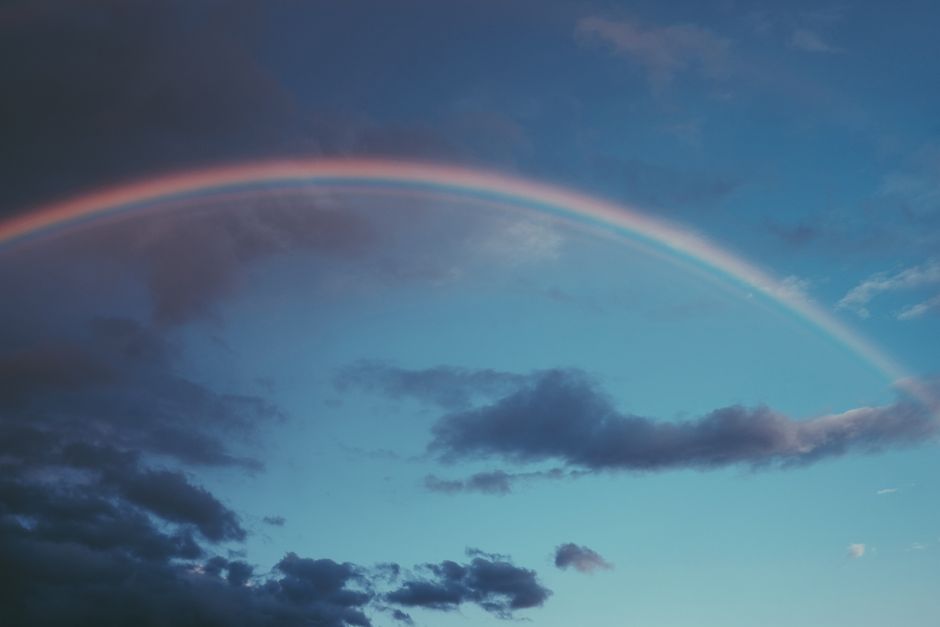
A rainbow is actually millions of colors blending smoothly together — we just sort them into seven big groups.
It’s a Full Circle
Rainbows are really complete rings of color. The ground hides the bottom half, but pilots high in the sky sometimes see the whole circle!
Yours Alone
No two people see the exact same rainbow — the one you’re looking at is made just for your eyes.
No Pot of Gold
You can never reach the end of a rainbow. As you walk toward it, it quietly moves away!
Where Do the Colors Come From?
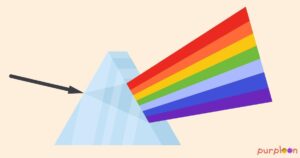
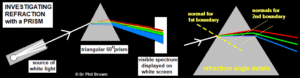
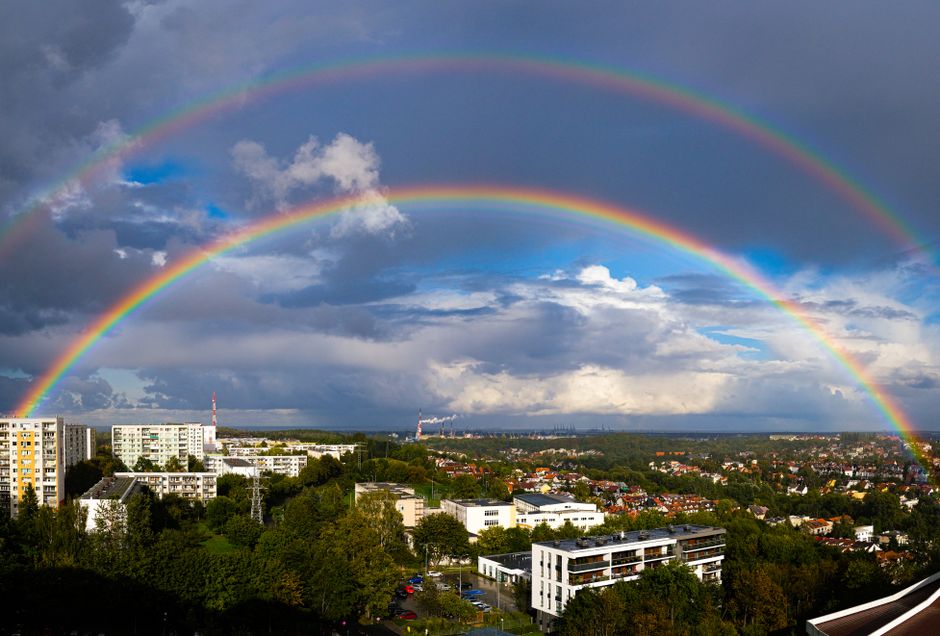
Sunlight looks plain white, but it’s actually all the colors mixed into one. When a ray of sunlight zooms into a tiny raindrop, it slows down and bends. Each color bends by a slightly different amount — red bends the least, violet bends the most. The light bounces off the back of the raindrop and bends again on the way out. By the time it leaves, the colors have fanned out like a tiny hand-held fan. Millions of raindrops doing this at once paint the giant arc you see in the sky.
So Why Do We Say “Seven”?
Here’s the surprising part: nature didn’t choose seven — a person did! Long ago, a scientist named Isaac Newton studied light and decided to name seven colors: red, orange, yellow, green, blue, indigo, and violet. He picked seven partly because he thought it matched the seven notes in a music scale. The rainbow itself is really a smooth blend with no sharp lines — one color melts gently into the next. So “seven” is a handy way for humans to talk about it, not a rule the sky follows.
🤯 Whoa, Really?!
In a double rainbow, the second arc is fainter and its colors are flipped — red ends up on the inside instead of the outside. Light bounces twice inside the raindrop to make it!
📖 Big Word: Spectrum
The full band of colors hiding inside white light, from red all the way to violet.
Not Seven — But Infinity!
A rainbow is really a smooth, unbroken blend of countless colours, each melting gently into the next with no real lines at all. So why do we say seven? Because a scientist — Isaac Newton — picked seven colour names on purpose, to match the seven notes of a musical scale. He even squeezed in “indigo,” a colour so close to blue that most people can’t actually tell them apart! Different countries and languages have counted the rainbow differently over the years — some say six, some more. Each colour is really just a different wavelength (size) of light wave, from long, lazy red to short, zippy violet.
📖 Big Word: Wavelength
Say it “WAVE-length.” Light travels in waves, and the wavelength is the size of each wave. Every colour is a different wavelength — red waves are the longest, violet waves the shortest.
How Your Eyes Turn Light Into Colour
Here’s something amazing about you. At the back of each eye are tiny colour detectors called cone cells — and you have just three kinds, most sensitive to red, green, and blue light. Your brain mixes their signals to build every single colour you’ve ever seen — millions of them — from only three! It’s the exact same trick your TV and phone use: zoom right in on a screen and you’ll find nothing but teeny red, green, and blue dots. Some animals do even better than us: bees and many birds have an extra detector and can see ultraviolet colours that are completely invisible to human eyes.
More Ways to Split the Light
You don’t even need rain to catch a rainbow! White light splits into colours all over the place:
- 💦 A garden sprinkler on a sunny day makes its own little rainbow.
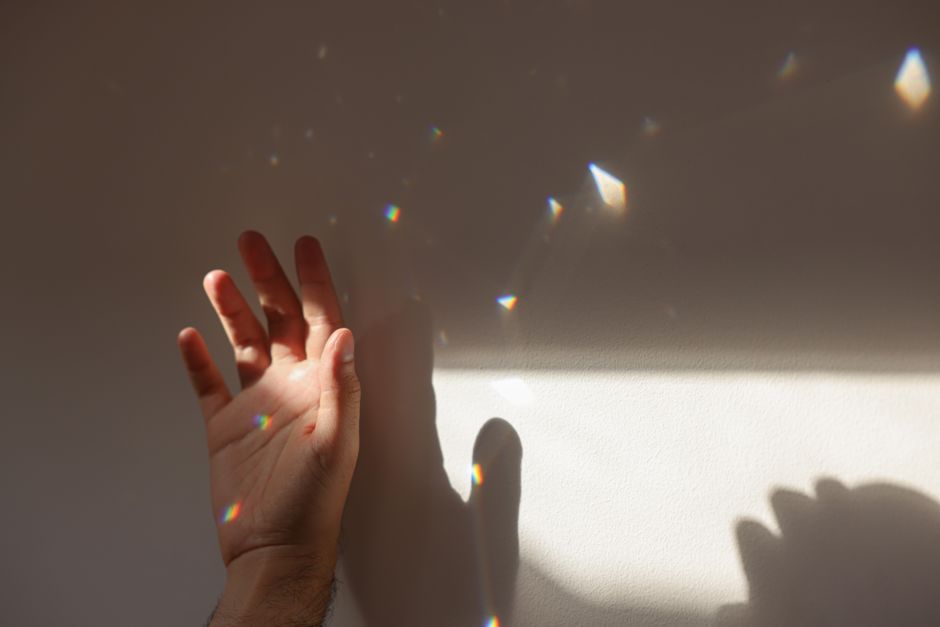
- 💿 A shiny CD or DVD throws colours across the wall.
- 🫧 A soap bubble swirls with colour as light bounces off its super-thin skin and mixes with itself.
- 🌈 An oily puddle shimmers with rainbow patterns for the same reason.
And one last mind-bender: because white light is all the colours together, if you spin a rainbow-coloured wheel really fast, the colours blend back into white — the complete opposite of mixing paints, which just makes a muddy brown!
🧠 Quick Quiz — tap an answer!
1. What does sunlight do inside a raindrop to make a rainbow?
2. Who decided to call out seven rainbow colors?
Frequently Asked Questions
Q: Does a rainbow really have exactly seven colours?
No — it’s a smooth blend of countless colours with no real lines. “Seven” is just a set of names Isaac Newton chose to match the seven musical notes.
Q: Why did Newton include indigo?
To make seven colours (matching the musical scale), even though indigo is so close to blue that most people can’t tell them apart.
Q: How do my eyes see so many colours?
You have just three kinds of colour detectors (cone cells) — red, green, and blue — and your brain mixes their signals to make every colour you see.
Q: Can animals see colours we can’t?
Yes! Bees and many birds can see ultraviolet light, a colour completely invisible to human eyes.
Q: Can I make a rainbow without rain?
Yes — a garden sprinkler, a shiny CD, a soap bubble, or an oily puddle all split white light into rainbow colours.
📚 Where we learned this (for curious grown-ups):
• Smithsonian Libraries — The Science of Color (Newton & the Spectrum)
• National Eye Institute (NIH) — How the Eyes Work (Cones & Colour)
• Exploratorium — Soap Bubble Colours (Thin-Film Light)
Keep Looking Up!
Next time the sun peeks out during a rain shower, stand with the sun behind you and watch the sky in front of you — that’s the perfect rainbow-spotting trick. Remember, you’re not just seeing seven colors. You’re seeing a whole secret world of light, bent and sorted by a million tiny raindrops, made just for you. How amazing is that?