Imagine a tiny honeybee buzzing through a sunny garden. She lands on your arm, gets a fright, and — ouch! — she stings you. But here is the sad and surprising part of the story: moments later, that little bee will die. It almost seems unfair. Why would stinging cost a bee her whole life?
The answer is hidden inside the bee’s own body, in a clever but risky tool she carries at her tail.
A Stinger Like a Tiny Fish Hook
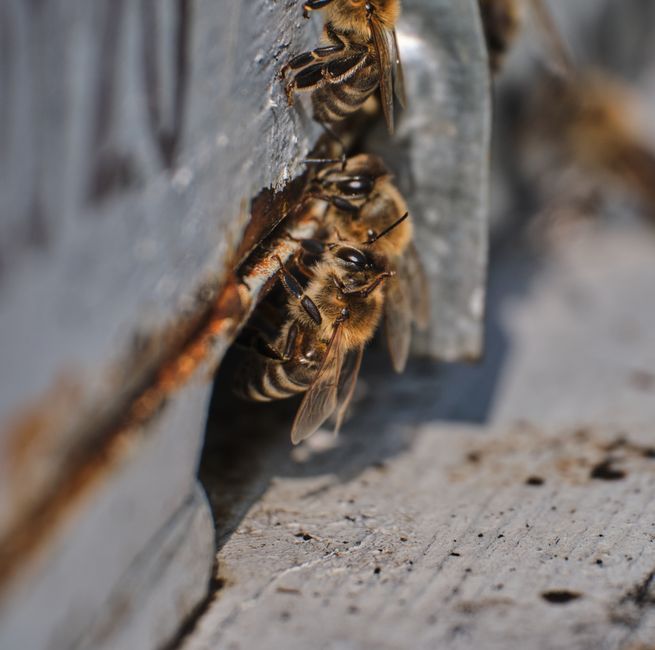
A honeybee’s stinger is not smooth like a sewing needle. If you could zoom in very, very close, you would see it is covered in tiny backward-facing points called barbs. They look a little like the hooks on a fishing line.
When a bee stings something soft and stretchy — like human skin — those barbs dig in and get stuck. The bee tries to fly away, but the stinger stays anchored in your skin. As she pulls, the stinger tears loose from her body, taking part of her with it. Sadly, a bee cannot survive losing that piece, and so she dies soon after.
📖 Big Word: Barb
A barb is a tiny, sharp point that faces backward, so something can slide in easily but is very hard to pull back out.
Why Would a Bee Do Something So Dangerous?
Here is the gentle truth: a honeybee does not want to sting you. Stinging is her last resort, used only when she feels her hive or herself is in danger. A single honeybee is just one member of a huge family of thousands, all working together. To her, protecting the whole hive matters more than protecting herself.
So when a bee gives her life with a sting, she is really sounding an alarm and defending her home. Nature built her to be a tiny, brave guardian — even though it means she may not come back.
The Stinger That Keeps Working
Here’s a spooky-sounding fact: even after the stinger tears loose and the bee flies away, that little stinger keeps working on its own! It’s attached to a tiny bag of venom, and a small pump keeps squeezing venom into the skin for up to a whole minute. That’s why the sting hurts and puffs up. It’s also why grown-ups say to scrape a bee stinger off sideways (with a fingernail or card) instead of pinching it — pinching just squeezes in more venom, like squeezing a tiny water balloon!
📖 Big Word: Venom
A special liquid some animals make to defend themselves or catch food, pushed in through a sting or bite. A bee’s venom is what makes a sting sore and itchy.
One for All: The Whole Hive Is Family
Why would a bee do something that costs her life? Because to a honeybee, the hive matters more than any single bee. A beehive is like one giant family — thousands of sisters, all daughters of the same queen. Each worker bee will give everything to protect that family. And she doesn’t fight alone: when a bee stings, she also puffs out a special “danger smell” that tells her sisters, “Come quick — there’s a threat!” So one brave little bee can call in the whole squad to defend their home.
How to Be a Bee’s Friend
The best news of all? Bees really don’t want to sting you — it’s the very last thing they’ll do, and it costs them their life. Almost every bee you meet is far too busy visiting flowers to bother with you. To stay sting-free and be a good friend to bees:
- 🧘 Stay calm and still if one lands on you — don’t swat! It’s just having a look and will fly off.
- 🚶 Walk away slowly from a hive or nest instead of flapping about.
- 🌻 Plant flowers and leave a shallow dish of water out — bees get thirsty too!
Remember, bees are gentle helpers that pollinate huge amounts of our food. They’re friends worth protecting, not fearing.
🌟 Did You Know?
Not every stinging insect dies! Wasps and bumblebees have smooth stingers without big barbs, so they can sting again and again and fly safely away.
The Lucky Ones: Queens and Flowers
Worker honeybees — the busy females you see visiting flowers — are the ones with barbed stingers. But a queen bee has a smoother stinger and usually only uses it against rival queens, so she can live on. And male bees, called drones, have no stinger at all!
Most of the time a honeybee never stings anything. She spends her short life sipping sweet nectar, carrying golden pollen from flower to flower, and helping plants make seeds and fruit. Stinging is the rare, last chapter of her story — not the main one.
Frequently Asked Questions
Q: Why do bees die after they sting?
A honeybee’s stinger has tiny barbs, like a fish hook. When she stings soft skin it gets stuck, and as she flies away it tears loose from her body — and she can’t survive that.
Q: Do all bees and wasps die when they sting?
No! Wasps and bumblebees have smooth stingers that slide right back out, so they can sting again and again and live. It’s mainly honeybee workers that die.
Q: Does the stinger keep hurting after the bee is gone?
Yes — the stinger stays stuck and a tiny venom sac keeps pumping venom for up to a minute. That’s why you should scrape it off quickly instead of pinching it.
Q: Why would a bee sting if it kills her?
To protect the hive. To a honeybee her family of thousands of sisters matters more than her own life, so stinging is a last-resort way to defend their home.
Q: How do I avoid getting stung?
Stay calm and don’t swat if a bee is near, walk away slowly from a nest, and remember bees would much rather visit flowers than sting you.
📚 Where we learned this (for curious grown-ups):
• USDA Agricultural Research Service — Bee Stings 101
• Britannica — Western Honeybee (Sting & Defense)
• Britannica — Bee Sting
The Big Idea
A honeybee dies after stinging because her barbed stinger gets stuck and tears away when she pulls free. It is a powerful reminder that bees are not out to hurt us — they sting only to protect their family, and it costs them everything. So the kindest thing we can do is stay calm, give bees space, and thank them for all the flowers, fruit, and honey they help create.