Go outside, pick up a leaf, and look really closely. People say all sorts of things about leaf shapes and the matching patterns we call symmetry — but some of those things just aren’t true! Grab a leaf and let’s bust a few leaf myths together.
📖 Big Word: Symmetry
When two halves of something match, like a mirror picture. Fold it down the middle and the sides line up!
So What’s Actually True?
Leaves love patterns. Many have one matching line down the middle, like a butterfly’s wings. The little veins branch out in repeating shapes too. But because each leaf grows on its own, no two are ever perfectly equal — and that little bit of wonky is what makes every leaf special.
Two Kinds of Symmetry to Spot
Once you become a pattern detective, you’ll notice that symmetry comes in two main flavours:
- Mirror symmetry (bilateral) — there’s one matching line, and the two sides are like a reflection. A leaf, a butterfly, a fish, and even your own face all have mirror symmetry. Draw a line down the middle and the two halves match!
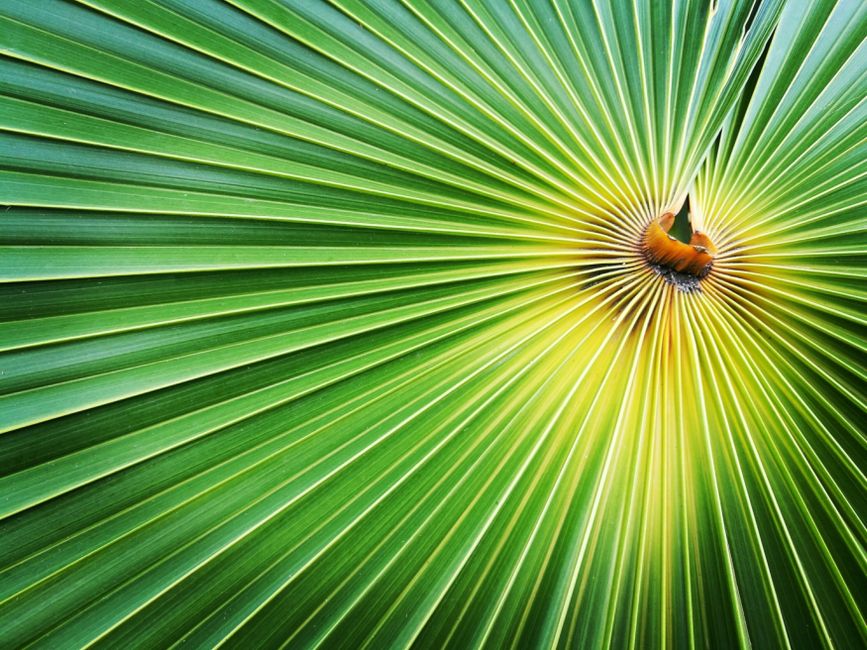
- Round symmetry (radial) — the pattern matches all the way around a middle point, like slices of a pizza. A starfish, a daisy, an orange cut in half, and a snowflake all have round symmetry — you could turn them and they’d still look the same.
📖 Big Word: Bilateral
“Bi” means two. Bilateral symmetry means something has two matching halves, split by a single mirror line — just like a leaf or a butterfly.
Symmetry Is Everywhere in Nature
Once you start looking, matching patterns pop up all over the place. Almost every animal — from an ant to an elephant — has a left side that mirrors its right, which helps it move in a straight line and stay balanced. Flowers often spread their petals in a neat circle to welcome bees from every direction. Snowflakes form beautiful six-sided shapes, and honeybees build their honeycomb out of matching six-sided boxes. Nature is the greatest pattern-maker of all!
Why Does Nature Love Matching Shapes?
Symmetry isn’t just for looks — it’s super useful. A balanced leaf catches sunlight evenly on both sides and stands strong in the wind. A balanced body helps an animal walk, swim, or fly without toppling over. And here’s a cool secret: scientists have found that bees and butterflies often prefer the most symmetrical flowers, because a nicely matching flower is usually a healthy one full of sweet nectar. So symmetry helps living things survive!
🎨 Try This: Paint a Symmetry Butterfly
Fold a piece of paper in half, then open it. Dab blobs of paint on one side only, fold it shut, and press gently. Open it up — ta-da! A perfectly matching butterfly. You just made your very own line of symmetry!
🌟 Did You Know?
Snowflakes, starfish, ladybirds and even your own face have symmetry too. Once you start spotting matching halves, you’ll see them everywhere!
🔍 Tap to Bust the Myth!
Frequently Asked Questions
Q: What is symmetry?
When two (or more) halves of something match, like a mirror picture. Fold it and the sides line up.
Q: What are the two main kinds?
Mirror (bilateral) symmetry with one matching line — like a leaf; and round (radial) symmetry that matches all around a centre — like a starfish.
Q: Are a leaf’s two halves exactly the same?
No — they’re very close but never perfect, because each leaf grows on its own.
Q: Does my body have symmetry?
Yes! Your face and body have mirror symmetry — your left side roughly matches your right.
Q: Why is symmetry useful in nature?
It helps leaves catch light evenly, helps animals balance and move straight, and helps flowers attract bees.
📚 Where we learned this (for curious grown-ups):
• Britannica Kids — Floral Symmetry
• Britannica — Bilateral Symmetry
• Britannica — Radial Symmetry
Now You Know!
Next time you’re outside, go on a leaf hunt. Fold them, match them, and look for the patterns hiding in every one. You’re not just collecting leaves — you’re a real pattern detective! 🍃