Have you ever watched colourful blobs float up and sink down inside a lava lamp and wished you had one of your own? Great news — with a few things from the kitchen, you can build a bubbling, glowing lamp right on your table. No special shop, no electricity needed for the magic part, just some clever science and a big dose of wow.
🧪 What You Need
- A clear bottle or tall glass
- Vegetable oil
- Water
- Food colouring
- An effervescent (fizzy) tablet
- A torch or phone light
Let’s Build It, Step by Step
⚠️ Stay Safe
Fizzy tablets and food colouring are for the experiment, not for eating or drinking. Keep the bottle upright, ask a grown-up to help, and wash your hands when you finish. If any liquid splashes near your eyes, rinse with clean water.
What’s Going On?
The secret starts with the oil and water. They never mix, because water blobs like to stick to other water blobs, while oil pushes them away. Water is also heavier than oil, so it sinks to the bottom and the oil floats on top — that is why you see two clear layers.
When the fizzy tablet hits the water, it makes lots of tiny bubbles of gas. These bubbles grab onto the coloured water and lift it upward, like little balloons carrying a passenger. At the top, the bubbles pop and escape into the air, so the water gets heavy again and sinks back down. Up, pop, down, up again — the blobs keep dancing for as long as the tablet keeps fizzing.
🤯 Whoa, Really?!
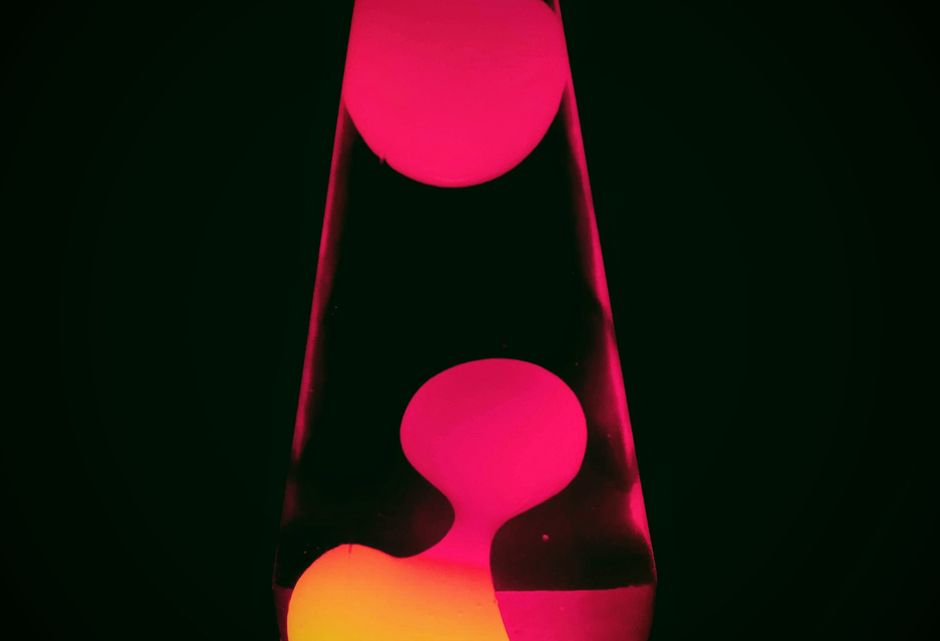
Real lava lamps work in a similar floaty way, but they use heat from a light bulb instead of bubbles, and a special waxy blob instead of coloured water!
Why Oil and Water Refuse to Mix
The two layers are the first clue. Water is made of tiny particles that love to cling to other water particles, while oil particles only want to stick to other oil — the two simply won’t grab hold of each other, so they always pull apart. Scientists call liquids that won’t blend like this immiscible. There’s a second reason oil sits on top: a cupful of oil weighs less than the very same cupful of water. That means oil is less dense, so it floats up above the heavier water — every single time.
📖 Big Word: Density
Density is how much “stuff” is packed into a space. If two things are the same size but one weighs more, the heavier one is denser. Less-dense things (like oil) float on top of denser things (like water).
The Secret of the Fizz: Making a Gas
So what makes the blobs dance? Your fizzy tablet is hiding two ingredients: a powdery acid and baking soda. While they’re dry, nothing happens — but the moment they touch water they react and start making bubbles of a gas called carbon dioxide. It’s the very same gas that makes fizzy drinks bubbly and that you puff out when you breathe! Those featherlight bubbles cling to a blob of coloured water and carry it up to the top like tiny balloons. Up there the gas escapes into the air, the water suddenly gets heavy again, and down it sinks — ready for the next lift. Up, pop, down, repeat!
How a Real Lava Lamp Works
A shop-bought lava lamp does the same floaty dance, but with heat instead of bubbles — and it’s all about density again. A light bulb at the bottom gently warms a special waxy blob. Warm wax spreads out and becomes less dense, so it floats up to the top. Up there it cools down, turns dense again, and sinks back to the bottom to be re-warmed — over and over, all evening long. This heat-powered rising and sinking has a name: convection. Now be a scientist and change one thing at a time: does warm water make the fizz faster than cold? Does a bigger piece of tablet make bigger blobs? Test it and find out!
🧠 Quick Quiz — tap an answer!
1. Why does the oil float on top of the water?
2. What lifts the coloured blobs up to the top?
Frequently Asked Questions
Q: Why don’t the oil and water mix?
Their tiny particles only cling to their own kind, so they never blend — that’s called being immiscible. And because oil is less dense (lighter for its size), it floats on top of the water.
Q: What makes the blobs float up and sink down?
The fizzy tablet makes carbon dioxide gas bubbles. They cling to coloured water and lift it up; at the top the gas escapes, the water gets heavy again and sinks.
Q: What is density?
How much stuff is packed into a space. Same size but heavier means denser. Less-dense things float on denser things — which is why oil floats on water.
Q: How is this different from a real lava lamp?
A real lamp uses heat, not bubbles. A bulb warms a waxy blob so it becomes less dense and rises, then it cools, gets denser, and sinks — a cycle called convection.
Q: How can I make the blobs move faster?
Try warm water instead of cold, or a bigger piece of tablet. Change just one thing each time so you know what made the difference — just like a real scientist.
📚 Where we learned this (for curious grown-ups):
• American Chemical Society — Baking Soda, Acid & Carbon Dioxide
• Science Buddies — Fizzy-Tablet Reaction & Temperature
• ACS C&EN — How Lava Lamps Work (Heat & Density)
You Did It!
You just built your very own lava lamp and learned why oil, water, and bubbles make such a lively show. Now try changing one thing: what if you use a bigger piece of tablet, a different colour, or warm water instead of cold? Each little change is a brand-new experiment waiting for you to discover!