Have you ever wondered where rain actually comes from? You don’t need to wait for a stormy day to find out — you can grow your very own tiny rain cloud right inside a cup and watch it “rain” on cue. It’s squishy, colourful, and over in a few minutes!
🧪 What You Need
- A clear glass or cup
- Water (about three-quarters full)
- White shaving foam
- Blue food colouring
- A small spoon
- A dropper or teaspoon
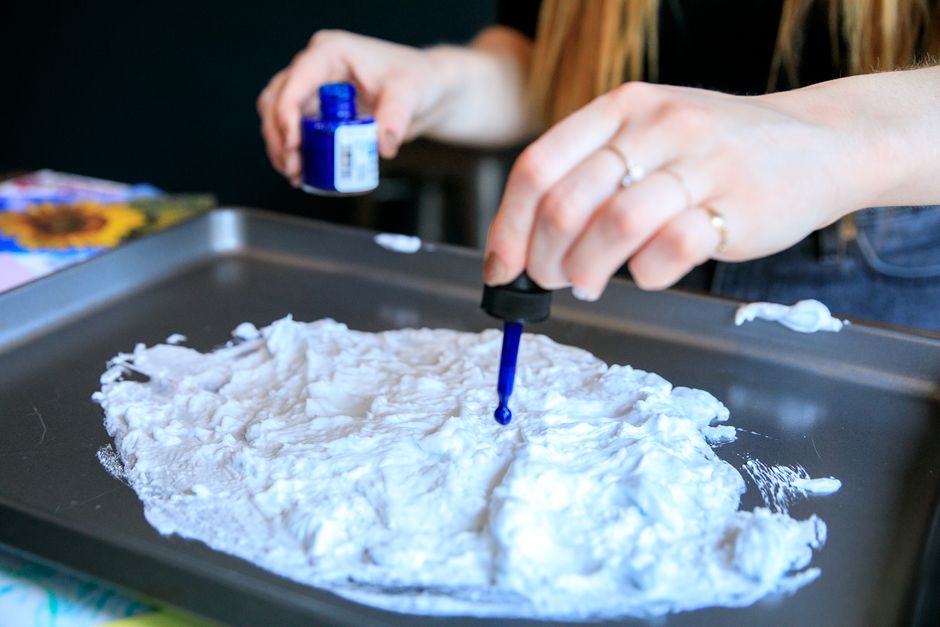

Let’s Build It, Step by Step
⚠️ Stay Safe
Food colouring can stain hands, clothes and tables, so wear an apron and work on a wipe-clean surface. Never taste the foam or coloured water — this is a watch-and-wonder experiment, not a snack!
What’s Going On?
Your foam cloud works just like a real cloud in the sky. A real cloud is made of millions of tiny water droplets floating in the air. They are so light and small that they simply float — the same way the foam floats on top of your water.
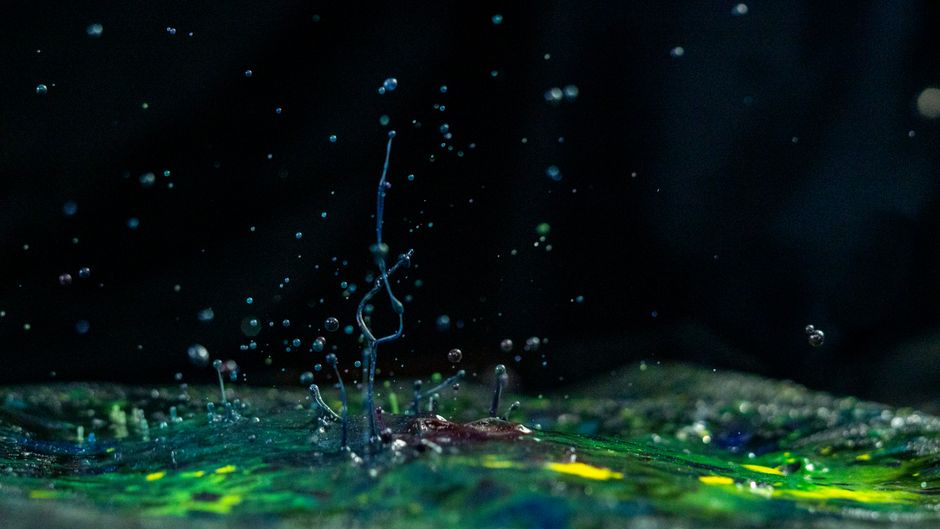
As you drip blue water on top, the foam holds it… up to a point. Real clouds do the same thing: they keep soaking up more and more water from the air. When a cloud becomes so heavy that it can’t hold the water any longer, the droplets fall as rain. In your cup, the foam can only hold so much blue water before it bursts through and rains down. Same idea, just shrunk into a cup!
🤯 Whoa, Really?!
A single fluffy white cloud floating overhead can hold hundreds of tonnes of water — about as much as a hundred elephants! It stays up there because the water is split into billions of droplets too tiny to see.
The Water Cycle: Water’s Never-Ending Journey
Your cup rain is one small part of a giant loop that never stops, called the water cycle. Here’s the whole round trip:
- ☀️ Evaporation — the Sun warms oceans, lakes, and puddles, turning water into an invisible gas called water vapour that floats up into the sky.
- ☁️ Condensation — high up it’s cold, so the vapour cools and turns back into tiny droplets that gather into clouds.
- 🌧️ Precipitation — when a cloud grows too heavy, the water falls as rain, snow, or hail.
- 🌊 Collection — that water flows into rivers and seas… and then the Sun warms it and the whole journey begins all over again!
The amazing part? It’s the same water going round and round — the rain in your cup’s big cousin may have splashed on dinosaurs millions of years ago!
📖 Big Word: Condensation
When an invisible gas (water vapour) cools down and turns back into tiny drops of liquid water. It’s how clouds form — and why drips appear on the outside of a cold glass on a warm day!
How a Real Cloud Is Born
A cloud doesn’t appear out of nowhere. As warm air carries invisible water vapour upward, it cools — and the vapour needs something to grab onto. So each tiny droplet forms around a teeny floating speck of dust, salt, or smoke (scientists call these “condensation nuclei”). That means every single cloud droplet has a microscopic speck at its heart! Gather billions of these featherweight droplets together and you get a cloud — so light it floats, exactly like the fluffy foam floating on your water.
Why It Doesn’t Rain Every Day
If clouds are full of water, why isn’t it always raining? Because those droplets start out far too tiny to fall — the gently rising air holds them up. Only when droplets bump into each other and join up, over and over, do they grow into drops heavy enough to win against the rising air and tumble down as rain. You can even spot which clouds mean business: fluffy white cumulus clouds usually mean fair weather, while thick, dark, shapeless nimbostratus clouds are the ones that bring steady rain.
🧠 Quick Quiz — tap an answer!
1. What does the fluffy foam stand for in this experiment?
2. Why does a real cloud finally make rain?
Frequently Asked Questions
Q: Where does rain actually come from?
From clouds. Clouds are made of billions of tiny water droplets, and when they join into drops that are heavy enough, they fall to the ground as rain.
Q: What is the water cycle?
The never-ending journey water takes: it evaporates into the sky, condenses into clouds, falls as precipitation, collects in rivers and seas, then starts again.
Q: How do clouds form?
Warm air lifts invisible water vapour upward; as it cools, the vapour condenses onto tiny floating specks of dust or salt, forming the droplets that make a cloud.
Q: Why doesn’t it rain every day?
Cloud droplets are usually too small and light to fall. It only rains once they bump together and grow into drops heavy enough to beat the rising air.
Q: How much water can a cloud hold?
A lot! A single fluffy cloud can carry hundreds of tonnes of water — it floats only because that water is split into billions of droplets too tiny to see.
📚 Where we learned this (for curious grown-ups):
• NASA Science for Kids — What Is the Water Cycle?
• NOAA JetStream — How Clouds Form
• USGS Water Science School — Precipitation & the Water Cycle
You Did It! ☁️
You just made the water cycle happen in a cup! Now try changing one thing: what if you use less foam, or add the blue water faster? Does it rain sooner or later? Real scientists test ideas exactly like this — one little change at a time — to discover how our weather really works.