Imagine writing a secret message that completely disappears on the page — until you shine a special light on it and the words suddenly glow back to life. Sounds like spy magic, right? With one clever trick, you can become a secret-message scientist tonight.
🧪 What You Need
- A yellow highlighter pen
- A small cup of water
- White paper
- A cotton bud or thin paintbrush
- A UV “blacklight” torch
- A grown-up helper
Let’s Make Glowing Ink
⚠️ Stay Safe
Always have a grown-up open the highlighter. Never shine a UV torch into anyone’s eyes or look straight into it — UV light can hurt your eyes. Keep the ink off your mouth, and wash your hands when you’re finished.
What’s Going On?
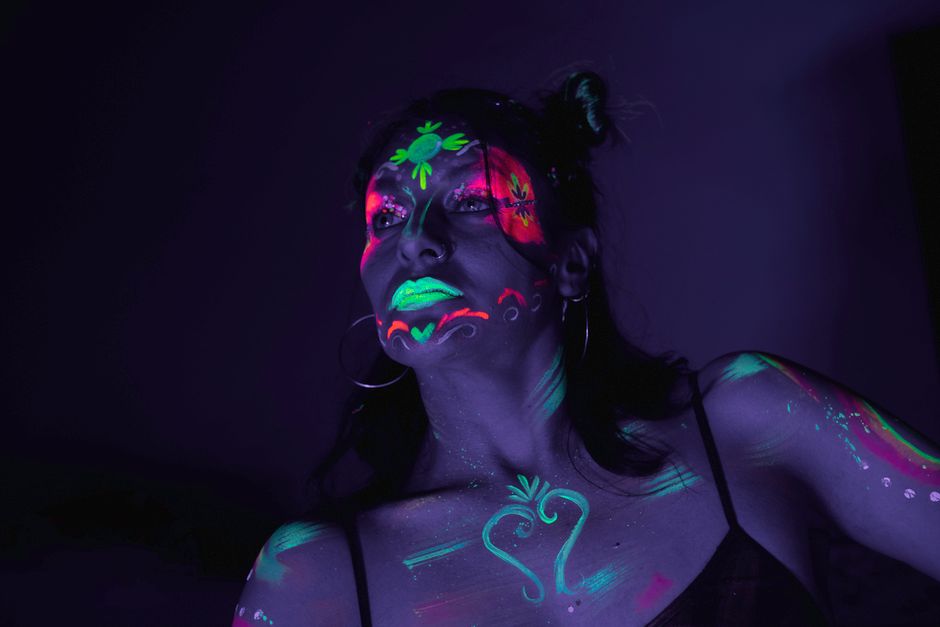
The ink from a highlighter contains special chemicals called fluorescent dyes. When ordinary light hits your dried message, nothing much happens — that’s why the words look invisible. But UV light carries lots of extra energy that our eyes can’t see on its own.
When that invisible UV light lands on the dye, the dye soaks up the energy and then gives it straight back out as light we can see. That sudden burst of visible glow is called fluorescence. So your message was never really gone — it was just waiting for the right kind of light to wake it up!
📖 Big Word: Fluorescence
When something soaks up invisible UV light and instantly glows with light we can see. The glow stops the moment you turn the UV light off.
🌟 Did You Know?
Lots of everyday things secretly glow under a UV torch — tonic water, some laundry powders, and even a banknote, which has hidden glowing patterns to stop people copying it!
What Is UV Light, Really?
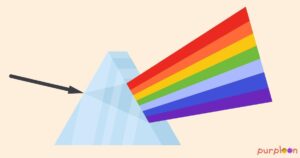
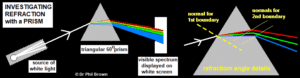
The special “blacklight” that wakes up your message shines ultraviolet light — often just called UV. It’s a kind of light that sits just beyond violet at the end of the rainbow. UV carries more energy than the light we can see, but its waves are too short for our eyes to notice, so it’s completely invisible to us. The Sun pours out loads of UV, and it’s the very part of sunlight that gives you a sunburn — which is exactly why sunscreen and hats matter! And while we can’t see UV, some animals can: bees use it to spot secret patterns on flowers that are invisible to human eyes.
📖 Big Word: Ultraviolet
Say it “ul-truh-VY-uh-let.” It’s a type of light just past violet on the rainbow, with more energy than we can see. Our eyes can’t detect it, but it can make special dyes glow — and it can give us sunburn.
Glow Now or Glow Later? Fluorescence vs Phosphorescence
Your secret ink glows only while the UV torch is shining, and it stops the instant you switch the torch off — that’s fluorescence (the dye gives the energy straight back). But glow-in-the-dark stars are different: they keep glowing after the lights go out! That trick is called phosphorescence — those materials soak up light and then let it back out slowly, like a slow leak, for minutes or even hours. Both soak up light and give it back; the difference is simply whether they hand it over instantly or hold onto it for a while.
Where Glowing Science Helps Every Day
Fluorescence isn’t just for secret spies — it’s all around you!
- 🖍️ Highlighter pens use it to make important words POP off the page.
- 🦺 Hi-vis safety vests and road signs glow brightly to help keep people safe.
- 💵 Banknotes and passports hide secret UV-glowing marks that make them very hard to fake.
- 👕 Washing powders sneak in “brighteners” that glow faintly blue, so white clothes look extra white.
Even nature gets in on it: scorpions shine an eerie green under UV light, and so do some minerals, and even a few frogs!
🔍 Tap to Reveal!
Frequently Asked Questions
Q: Why does the invisible ink glow under a UV light?
The highlighter ink has fluorescent dye. It soaks up the invisible UV light and instantly gives it back out as a glow we can see.
Q: What is UV (ultraviolet) light?
A kind of light just beyond violet on the rainbow. It has more energy than visible light, but our eyes can’t see it — and it’s what causes sunburn.
Q: What’s the difference between fluorescence and phosphorescence?
Fluorescence glows only while the UV light is on and stops instantly. Phosphorescence (glow-in-the-dark) keeps glowing for a while after the light is switched off.
Q: Where is fluorescence used in real life?
In highlighters, hi-vis safety gear, secret marks on banknotes and passports, and brighteners in washing powder that make whites look whiter.
Q: Do any animals glow under UV light?
Yes! Scorpions glow bright green under UV, and so do some minerals and even a few frogs.
📚 Where we learned this (for curious grown-ups):
• NASA — Ultraviolet Waves
• Britannica — Luminescence (Fluorescence vs Phosphorescence)
• Exploratorium — That Special Glow (Fluorescence)
You Did It! 🔦
You’ve cracked the science of secret messages! Now try changing one thing: what if you use a different colour of highlighter, or write on coloured paper instead of white? Which one glows the brightest? Test it out and keep your spy-science notebook full of discoveries.