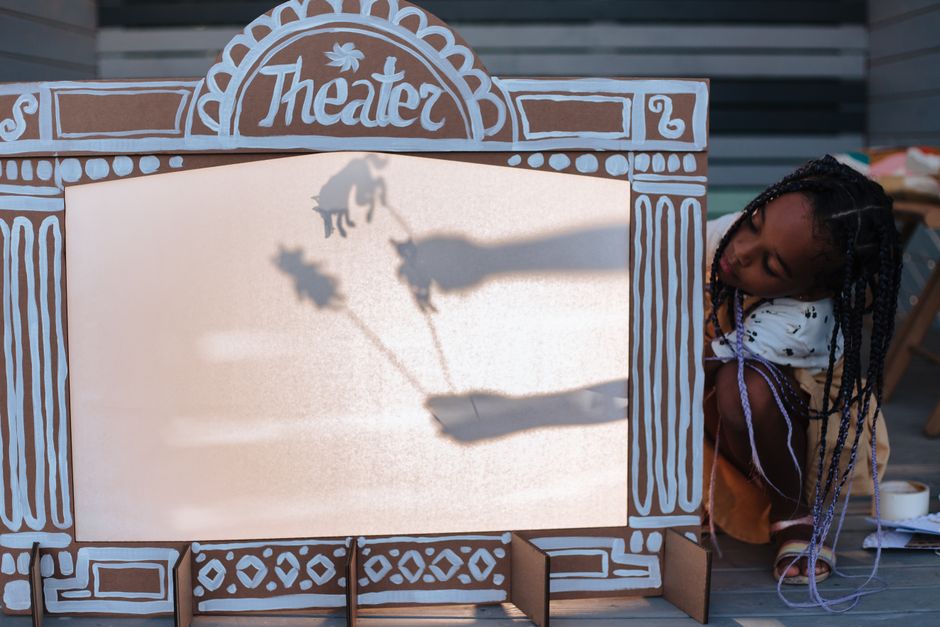
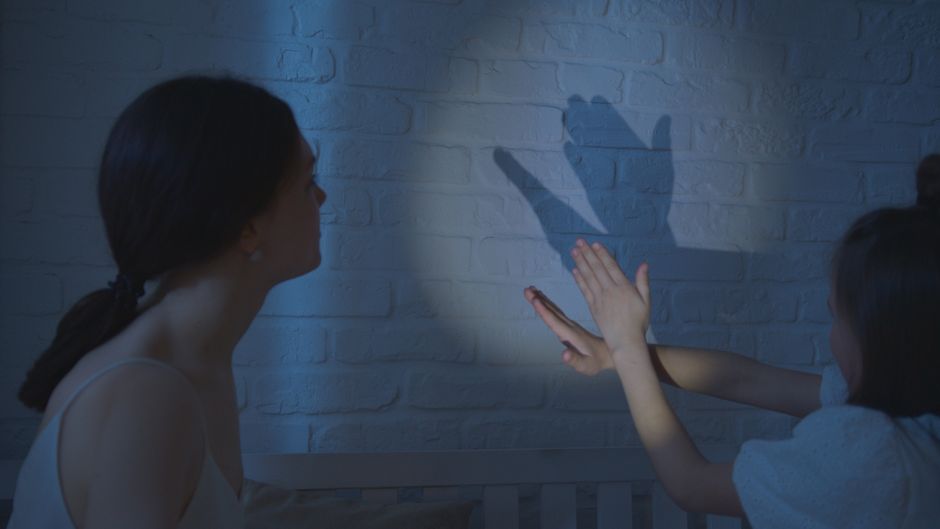
Turn off the big light, grab a flashlight, and get ready for magic — tonight your wall becomes a tiny theatre, and YOU are the puppeteer! A shadow theatre is one of the oldest, simplest kinds of storytelling in the whole world, and you can build one at home with things you already have.
🧪 What You Need
- A flashlight or phone light
- A big cardboard box
- A white bedsheet or paper
- Black paper or card
- Craft sticks or straws
- Sticky tape & scissors
Let’s Build It, Step by Step
What’s Going On?
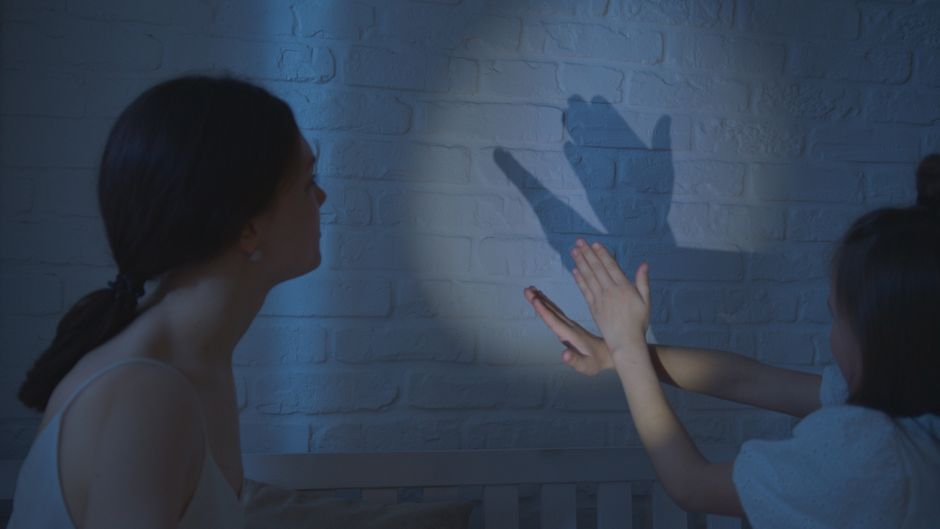
Light loves to travel in straight lines. When your puppet stands in the way, the light cannot bend around it, so it leaves a dark patch behind — that dark patch is the shadow. Because the light cannot pass through the black paper, the shape shows up crisp and dark on your screen.
Here is the really fun part: move your puppet CLOSE to the light and its shadow grows huge and giant. Move it close to the screen and the shadow shrinks back to its real size. Your little bunny can become a giant bunny just by sliding it nearer the flashlight!
📖 Big Word: Silhouette
A silhouette (say it “sil-oo-ET”) is the dark outline shape of a thing — exactly what your shadow puppets make on the screen!
⚠️ Stay Safe
Ask a grown-up to help with the scissors when you cut the box. Never shine a flashlight straight into anyone’s eyes — point it at the screen only.
🤯 Whoa, Really?!
People have been making shadow puppets for over a thousand years! Long ago, before TV or movies, families gathered to watch shadow plays on a glowing cloth screen.
The Science of Shadows
A shadow forms because light travels in perfectly straight lines (called rays) and can’t bend around a solid object. But not everything makes the same shadow — it depends on the material:
- 🟥 Opaque (your black paper, a book, or you!) — blocks all the light, making a lovely dark, crisp shadow.
- 🌫️ Translucent (tissue paper, frosted glass) — lets some light through, making a faint, fuzzy shadow.
- 🪟 Transparent (clear glass, clean water) — lets light zoom straight through, so there’s almost no shadow at all.
Try holding up different things in the beam and see which make the boldest shadows!
📖 Big Word: Opaque
Say it “oh-PAYK.” It means something light can’t pass through, so it casts a lovely dark shadow (like your puppet). Its opposite is transparent — which light zooms right through.
Play With Shadow Size and Shape
Here’s where it gets really fun. The closer your puppet is to the light, the bigger its shadow grows — because it blocks more of the spreading beam. Slide it back toward the screen and the shadow shrinks small and sharp. Tilt the puppet, or move the light to one side, and the shadow stretches into brand-new shapes — that’s how a little rabbit becomes a giant monster! It’s the very same reason your own shadow outdoors is long and stretchy in the early morning and evening (when the Sun is low), but short and stubby at midday (when the Sun is high overhead).
Shadow Puppets Around the World
Shadow puppetry is one of the oldest kinds of theatre on Earth, and different countries have their own beautiful traditions. In Indonesia, a style called wayang kulit uses gorgeous carved-leather puppets in shows that can last all night — a tradition over 1,000 years old! China, Turkey, and Greece have their own shadow-play styles too. For centuries, long before TV, families gathered to watch these glowing stories dance across a cloth screen. Now you’re part of that ancient, worldwide tradition!
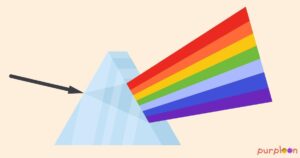
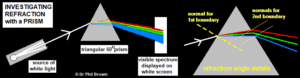
🌈 Try This: Rainbow & Double Shadows!
Tape a piece of coloured cellophane over your flashlight for glowing coloured shadows — or shine two flashlights from slightly different spots and watch your puppet make two overlapping shadows at once!
🔍 Tap to Reveal!
Frequently Asked Questions
Q: Why does a shadow form?
Light travels in straight lines and can’t bend around a solid object, so the object leaves a dark patch behind it — that’s the shadow.
Q: Why is a shadow puppet’s shadow so dark?
Because the puppet is opaque — it blocks all the light from passing through, giving a crisp, dark shape.
Q: How do I make the shadow bigger?
Move the puppet closer to the light. Move it closer to the screen and the shadow shrinks.
Q: Why does my shadow change size outside?
It’s long when the Sun is low (morning and evening) and short when the Sun is high at midday — the same size trick as your puppets.
Q: How old is shadow puppetry?
Very old — over a thousand years! Traditions like Indonesia’s wayang kulit have entertained families for centuries.
📚 Where we learned this (for curious grown-ups):
• Smithsonian — The Science of Light & Shadows
• Science Buddies — Making Shadow Puppets
• Smithsonian Folklife — Wayang Kulit Shadow Puppetry
You Did It!
You built a real theatre out of a box and a beam of light — amazing! Now try changing just one thing: what if you use your own hands to make a barking dog or a flapping bird? What if you add a second puppet and let two characters talk? Every change makes a brand-new story. Lights down… the show is YOURS!