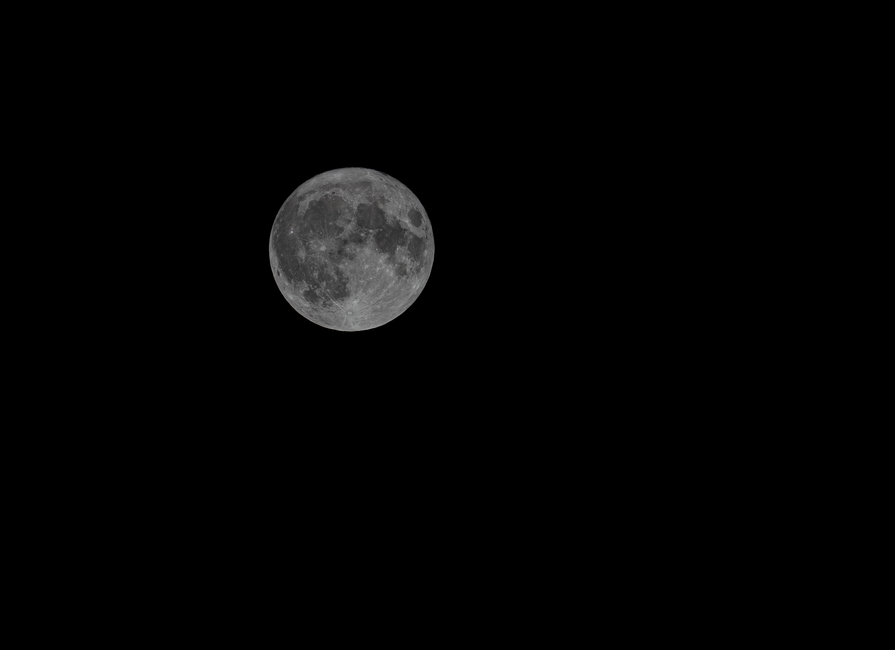
You’re riding in the car at night, you look out of the window, and there it is — the Moon, gliding along right beside you. You speed up, it keeps up. You turn a corner, it’s still there. It really does look like the Moon has picked your car to follow home! Lots of people believe the Moon is somehow chasing them. Let’s bust that idea wide open and find out what’s really going on.
Let’s Test the Big Belief
So What’s Actually True?
Here’s the real secret. When your car races forwards, the things close to the road — trees, fences, lamp posts — flash past your window in a blur. They’re near, so even a tiny bit of travel makes them shoot by. But the Moon is enormously far away, hundreds of thousands of kilometres up in space. When you move a few metres down the road, that’s nothing at all compared to that huge distance. So the Moon barely shifts its spot in the sky.
Your clever brain compares the two. The trees whizz backwards, but the Moon seems to stay glued in place beside you. The only way your brain can make sense of that is to decide the Moon must be travelling along with you. It’s not magic and it’s not following you — it’s a trick of distance that scientists call parallax.
📖 Big Word: Parallax
When near things and far things seem to move by different amounts as you move. Close things race past; faraway things hardly budge. Try it: hold one finger close to your face and wink each eye — your finger jumps, but the wall behind hardly moves!
How Far Away IS the Moon?
To really get why the Moon seems to tag along, you need to know just how far away it is: about 384,000 kilometres! That’s so far you could line up nearly 30 whole Earths in the gap between here and the Moon. So when your car zips even a few kilometres down the road, that’s just a tiny sliver next to that gigantic distance — and the Moon’s spot in the sky barely shifts at all. That’s exactly why it looks like it’s gliding right along beside you. (The Sun is even farther away — about 150 million km — so it seems to “follow” you in the daytime too!)
📖 Big Word: Illusion
Say it “ill-OO-zhun.” It’s when your eyes and brain get tricked into seeing something that isn’t really happening — like the Moon “following” your car.
Scientists Use This Trick on Purpose!
Here’s the coolest part: parallax isn’t just a fun car mystery — astronomers actually use it to measure how far away the stars are! They look at a nearby star from two points on opposite sides of Earth’s year-long journey around the Sun, and measure the teeny amount the star seems to shift against the far-off background stars. The smaller the shift, the farther the star. So the very same effect that makes the Moon “follow” your car helps scientists map distances across our whole galaxy. Not bad for a bedtime window trick!
Try It Yourself: Be a Parallax Detective
- 👁️ Finger wink: hold one finger close to your nose and wink each eye in turn — your finger jumps side to side, but the far wall barely moves.
- 🚶 Walk and watch: walk across a room while watching something close and something far out the window — the near thing slides past fast; the far thing stays put.
- 🚗 Night-drive challenge (with a grown-up driving): pick a near thing (a fence) and a far thing (a hill, or the Moon) and watch how differently they seem to move. Distance is the whole secret!
🤔 Fact or Fib? — tap your guess!
The Moon speeds up to keep beside your car.
Nearby trees whoosh past faster than the faraway Moon.
The Sun can seem to follow you in the daytime too.
Frequently Asked Questions
Q: Is the Moon really following my car?
No — the Moon stays far out in space and has no idea your car exists. It just looks like it’s following you.
Q: Then why does it seem to keep up with me?
Because it’s so far away (about 384,000 km) that driving a few kilometres barely changes its spot in the sky, while nearby trees whoosh past. That’s called parallax.
Q: What is parallax?
When near things and far things seem to move by different amounts as you move — close things race by, faraway things hardly budge.
Q: Does the Sun do this too?
Yes! The Sun is even farther away, so in the daytime it can also seem to follow along beside you.
Q: Do scientists ever use parallax?
Yes — astronomers use it to measure how far away the stars are by watching how much they shift over the year.
📚 Where we learned this (for curious grown-ups):
• NASA Space Place — How Far Away Is the Moon?
• NASA StarChild — Parallax & Measuring Star Distances
• Britannica — Parallax
Now You Know!
The Moon isn’t following you, and it never was — it’s simply so far away that it can’t seem to move while everything close zips by. Next time you’re in the car at night, you can smile up at the Moon and tell whoever’s with you the real reason it looks like a loyal little friend tagging along. You’ve busted the myth!