Squishy, stretchy, gooey slime — and you only need two things to make it! No fancy kits, no long shopping list. Just school glue and liquid starch, and in a few minutes you’ll be pulling and squashing your own batch of homemade goo. Ready? Let’s get sticky!
🧪 What You Need
- White (or clear) PVA school glue
- Liquid starch
- A bowl and a spoon
- Food colouring (optional)
- An old shirt or apron

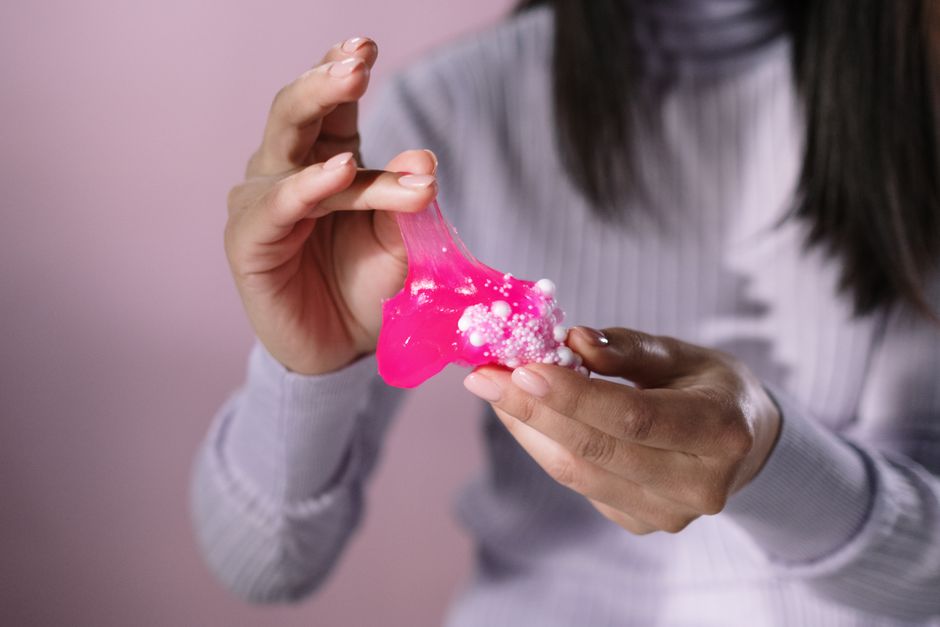
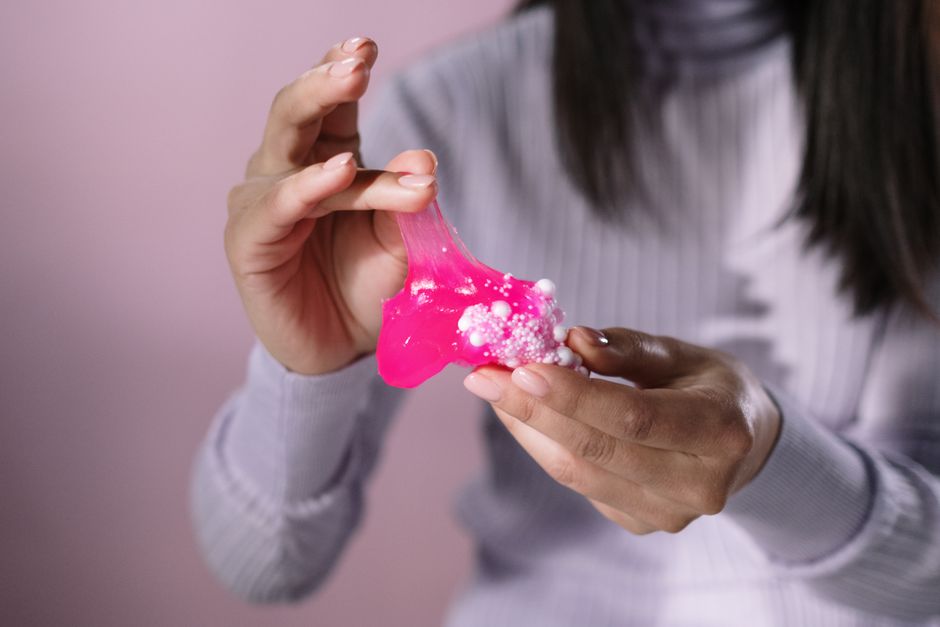
Let’s Make It, Step by Step
⚠️ Stay Safe
Slime is for playing, never for eating. Ask an adult to help, wash your hands when you finish, and stop if your skin feels itchy. Keep it away from carpets, hair, and pets!
What’s Going On?
Glue is full of tiny, bendy strands called polymers. On their own, these strands slide right past each other, which is why glue pours like a liquid. The liquid starch acts like a magic glue of its own: it links the strands together at lots of little points, like tying loose threads into a net.
Once the strands are tied together, they can still move and stretch — but they can’t flow away freely anymore. That in-between feeling, not quite liquid and not quite solid, is exactly what makes slime so wonderfully squishy and stretchy!
📖 Big Word: Polymer
A polymer is a long, chain-like material made of the same small part repeated over and over — like a paper chain made of many little loops.
🌟 Did You Know?
Polymers aren’t just in slime! Plastic bottles, stretchy rubber bands, and even parts of your own body are made of polymer chains too.
The Secret: Tangling the Strands
Picture a big bowl of cooked spaghetti. The strands slide and slither past each other, so the whole thing pours and flows like a liquid — that’s the glue on its own, with its long polymer strands. Now imagine tying those strands together with little knots here and there. They can still wiggle and stretch, but they can’t slip away and flow anymore. That’s exactly what the liquid starch does to the glue’s strands! Scientists call this tying-together cross-linking, and it turns flat, runny strands into one big stretchy 3-D net — your slime.
📖 Big Word: Cross-Linking
When a helper (like the starch) connects long polymer strands together at lots of points, turning a runny liquid into a stretchy, squishy solid-ish material. That’s the whole secret of slime!
Solid or Liquid? It’s Both!
Slime is a wonderfully weird in-between: poke it slowly and it oozes like a liquid, but squeeze or yank it fast and it acts more like a solid (it might even snap!). Materials that change how they behave depending on how hard you push them are called non-Newtonian — and slime, ketchup, and toothpaste are all a bit like this. Want the most dramatic one? Mix cornflour with a little water to make “oobleck”: press it hard and it turns solid under your fingers, but stop pressing and it drips away like a liquid!
Be a Slime Scientist: Experiment!
- ➕ More starch makes firmer, less sticky slime; less starch makes it gooier. Change just one thing and see!
- ✨ Mix in glitter, tiny foam balls, or two colours for brand-new textures.
- 🔎 Try clear glue for glassy slime, or white glue for cloudy slime.
- 📓 Keep a slime journal: change ONE thing each batch and write down what happened — that’s a real fair test, just like a scientist!
🔍 Tap to Reveal!
Frequently Asked Questions
Q: Why does runny glue turn into stretchy slime?
The starch ties the glue’s long polymer strands together (cross-linking), so they can stretch but can’t pour away freely anymore.
Q: What is a polymer?
A long, chain-like material made of the same small part repeated over and over — like a paper chain of many little loops.
Q: Is slime a solid or a liquid?
Both! Poke it slowly and it oozes like a liquid; squeeze it fast and it acts like a solid. That in-between behaviour is called non-Newtonian.
Q: My slime is too sticky — what do I do?
Add a tiny bit more liquid starch and keep kneading until it’s smooth and stretchy.
Q: Can I eat slime?
Never — slime is only for playing with your hands. Wash up afterwards, and stop if your skin feels itchy.
📚 Where we learned this (for curious grown-ups):
• American Chemical Society — The Chemistry of Slime
• ACS (C&EN) — The Science Behind Slime
• PBS KIDS for Parents — Make Oobleck (Non-Newtonian Fluid)
You Did It!
Look at you — a slime scientist! Now try changing one thing: what if you add more starch, swirl in two colours, or mix in a spoonful of glitter? Each little change makes a brand-new batch, and every batch teaches you something new about polymers.