Buckle up, because the octopus is about to break every rule you know about animal bodies. Three hearts, blue blood, and brains in its arms — this squishy ocean genius is one of the strangest, smartest creatures on the whole planet. Let’s dive in!
Three Hearts
Two pump blood to the gills, and one pumps it around the rest of the body.
Blue Blood
Octopus blood is blue, not red, because it carries oxygen using copper instead of iron.
Nine Brains
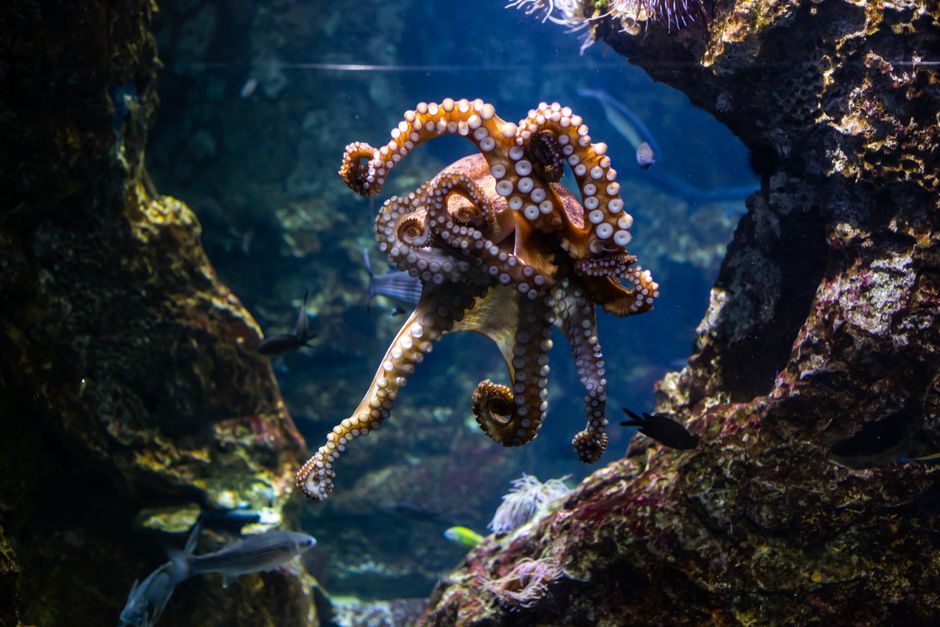
A big brain in the head, plus a mini brain in each of the eight arms!
Colour Changer
It can switch colour and even skin texture in under a second to hide.
Why Three Hearts?
An octopus needs lots of oxygen to keep its body moving through the water. Two of its hearts — called the branchial hearts — sit right next to its gills. Their only job is to push blood through the gills, where it picks up fresh oxygen from the seawater. The third heart, the systemic heart, then sends that oxygen-filled blood out to the arms, eyes, and the rest of the body. Three hearts working as a team keep this clever hunter alive and active.
🤯 Whoa, Really?!
When an octopus swims, its main heart actually stops beating! That’s why many octopuses would rather crawl along the seafloor — swimming wears them out fast.
Why Is the Blood Blue?
Our blood is red because it uses a substance called hemoglobin, which is full of iron, to carry oxygen. Octopuses use something different called hemocyanin, which uses copper instead of iron. When copper grabs oxygen, it turns blue — so an octopus really does have blue blood flowing through its body. This special blue blood works extra well in cold, low-oxygen ocean water, which is exactly where many octopuses live.
🌟 Did You Know?
Most of an octopus’s nerve cells are in its arms, not its head. Each arm can taste, touch, and even solve little problems almost on its own!
The Amazing Escape Artist
Here’s a jaw-dropper: an octopus has no bones at all. Its whole body is soft and squishy, so it can pour itself through a gap as tiny as its own eyeball! The only hard part is a small, parrot-like beak hidden where its arms meet. That’s how an octopus slips into a narrow crack to hide, or sneaks out of a tank when nobody’s looking — and yes, that really happens at aquariums!
Masters of Disguise
The octopus is the ocean’s greatest quick-change artist. Its skin is packed with thousands of tiny colour-changing cells called chromatophores. By squeezing and relaxing them, it can turn red, brown, yellow, or ghostly pale in under a second — and it can even make its skin bumpy or smooth to match rocks and coral. If a hungry predator still spots it, the octopus has one more trick: it squirts a cloud of dark ink to confuse the attacker, then jets away to safety!
📖 Big Word: Chromatophore
A tiny bag of colour inside an octopus’s skin. Thousands of them working together let it change colour in the blink of an eye.
Super-Smart Suckers
Each of an octopus’s eight arms is lined with hundreds of bendy suckers — and amazingly, they can both grip and taste! Octopuses are some of the cleverest animals in the sea. They solve puzzles, open jars to reach a snack, and some even carry coconut shells around to use as a cosy portable shelter. An animal that uses tools — now that’s a genius of the deep!
🐙 Try This: Be an Octopus
Wiggle eight pretend arms, then “camouflage” by matching the colour of the sofa or carpet you’re sitting on. Next time you’re at an aquarium, see if you can even spot the octopus — they’re masters of hide-and-seek!
🧠 Quick Quiz — tap an answer!
1. How many hearts does an octopus have?
2. Why is octopus blood blue?
Frequently Asked Questions
Q: How many hearts does an octopus have?
Three — two pump blood to the gills, and one pumps it around the rest of the body.
Q: Why is octopus blood blue?
It carries oxygen using copper (called hemocyanin) instead of the iron our red blood uses.
Q: How does an octopus change colour?
With thousands of tiny colour cells (chromatophores) in its skin that it can change in under a second.
Q: Are octopuses really that smart?
Yes! They solve puzzles, open jars, and some even use coconut shells as tools.
Q: Can an octopus really fit through tiny gaps?
It can — with no bones, it can squeeze through a hole as small as its own eyeball.
📚 Where we learned this (for curious grown-ups):
• Smithsonian Ocean — How Octopuses Change Colour
• Monterey Bay Aquarium — Giant Pacific Octopus
• Britannica Kids — Octopus
Keep Exploring!
The octopus reminds us that nature can be far stranger and more wonderful than anything we imagine. Three hearts, blue blood, eight clever arms — and we’re still discovering new octopus secrets every year. Next time you visit an aquarium, look closely at one of these soft, shape-shifting geniuses, and remember the amazing machinery working away inside!