Here’s a secret: you don’t need to buy a single instrument to start a band. Your recycling bin is full of them! Every sound you hear — a drum, a hum, a twang — is really just something wiggling back and forth very fast. That wiggle is called a vibration, and it makes the air shiver until it tickles your ears. Let’s turn yesterday’s trash into today’s music!

🥁 Things That Shake & Tap
1. The Rattle Shaker
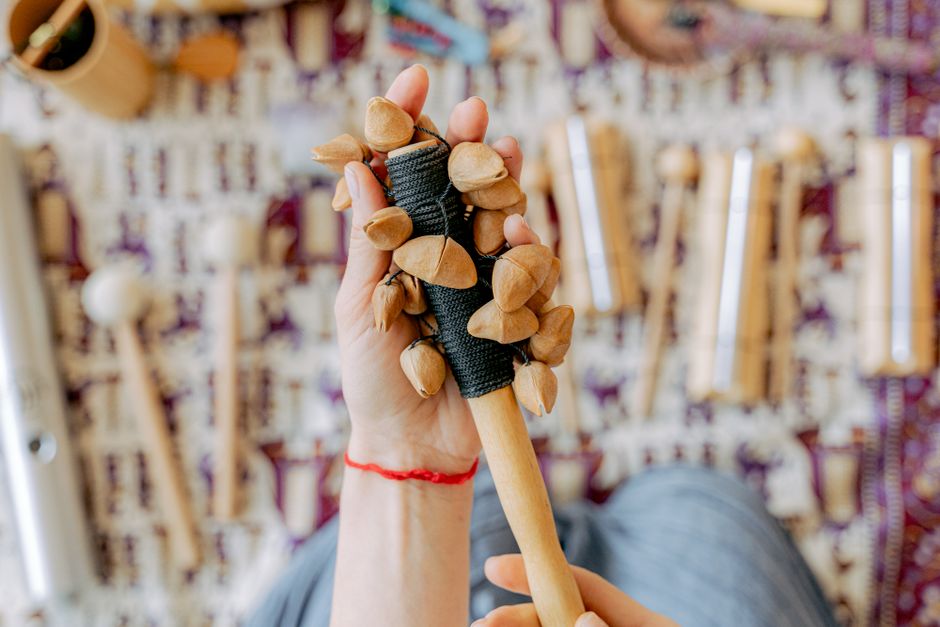
Pour a small handful of dry rice or beans into an empty bottle and screw the lid on tight. Give it a shake! The little bits bounce off the sides and rattle. Fewer beans make a soft swish; more beans make a big shoosh.
2. The Tin-Can Drum
Stretch a balloon over the open top of a clean, empty can and hold it with a rubber band. Tap the top with your finger. Feel it bounce? That bounce is the vibration that makes the drum sound.
🎺 Things That Blow & Hum
3. The Cardboard Tube Horn
Press an empty kitchen-roll tube to your lips and hum or buzz like a bee. The long tube makes your buzz sound deep and brassy, just like a real horn.
4. The Comb Buzzer
Wrap a piece of thin paper around a clean comb. Hold it to your lips and hum a tune. The paper flutters super fast and turns your voice into a funny, tickly buzz.
🎸 Things That Twang & Strum
5. The Box Guitar
Stretch a few rubber bands around an empty tissue box, right over the hole. Pluck them! Thin, tight bands sing a high note; thick, loose ones rumble low. You just made strings.
6. The Bottle Xylophone
Line up some glass jars or bottles and pour a little water in each one — a tiny bit in the first, more in the next, and so on. Tap them gently with a spoon. Each one rings a different note!
🧪 Try This at Home
Put your fingers very gently on your throat and hum a long “mmmm.” Feel the buzzy tickle? That is your body vibrating to make sound — you are an instrument too!
Now your band has shakers, horns, and strings. Try playing them softly, then loudly. A bigger wiggle makes a louder sound, and a faster wiggle makes a higher one. That is the science of sound, hiding right inside your music.
Three Families of Instruments
Every instrument you just built belongs to one of the great instrument families — and the trick to spotting which is asking: what is doing the wiggling?
- 🥁 Percussion — you hit or shake something solid so it vibrates: the drum’s stretchy skin, the rattle’s bouncing beads.
- 🎺 Wind — a column of air inside vibrates: your buzz down the cardboard horn, or the fluttering paper on the comb.
- 🎸 Strings — a stretched string vibrates when you pluck it: the rubber bands on your box guitar.
Amazingly, almost every instrument in a real orchestra fits one of these same families — a grand piano, a trumpet, and a violin are just fancier cousins of your trash-band creations!
The Secret of Loudness: Making the Sound BIGGER
Why is a gentle tap quiet but a hard tap loud? Because loudness depends on how big the vibration is — scientists call that the amplitude. A bigger wiggle pushes the air harder, so the sound is louder. But there’s a clever second trick hiding in your instruments: the hollow can, box, or tube isn’t just a handle to hold — it catches the vibration and sets a whole pocket of air shivering too, which makes the sound much louder. That’s exactly why your tissue-box guitar is far louder than a lonely stretched rubber band, and why real guitars and violins have big hollow wooden bodies to amplify their strings.
📖 Big Word: Amplify
Say it “AM-pluh-fy.” It means to make something bigger or louder. A hollow sound box amplifies an instrument by making a big pocket of air vibrate along with the string.
One Bottle, Two Tunes: A Sound Surprise
Your bottle xylophone hides a brilliant secret — the very same bottles can be played two opposite ways!
- 🥄 Tap it with a spoon: now the glass and water vibrate. More water is heavier and wobbles slower, so it makes a lower note. (An empty bottle rings the highest.)
- 🌬️ Blow across the top: now the air inside vibrates. More water leaves less air, and less air vibrates faster — so it makes a higher note. (An empty bottle hums the lowest.)
Same bottles, flipped rules! Line them up, tap your way down, then blow your way down, and listen to the tune turn upside down. That’s a real scientist’s discovery hiding in your kitchen.
🤔 Fact or Fib? — tap your guess!
All sounds are made by something vibrating.
A short, tight rubber band makes a lower note than a long, loose one.
Adding more water to a bottle changes the note it makes when you tap it.
Frequently Asked Questions
Q: How do instruments make sound?
Something vibrates — a drum skin, a column of air, or a stretched string — and that wiggle shakes the air until it reaches your ears as sound.
Q: What are the main families of instruments?
Percussion (you hit or shake it), wind (a column of air vibrates), and strings (a stretched string vibrates). Nearly every instrument fits one of these.
Q: What makes a sound louder?
A bigger vibration (called greater amplitude). A hollow box or tube also amplifies the sound by making a pocket of air vibrate along with it.
Q: Why does a box guitar sound louder than a bare rubber band?
The hollow box resonates and amplifies the string’s vibration — the same reason real guitars and violins have hollow bodies.
Q: Why does the bottle’s note change with more water?
It depends how you play it! Tapping vibrates the glass and water (more water = lower note); blowing across the top vibrates the air (more water = higher note).
📚 Where we learned this (for curious grown-ups):
• Britannica — Musical Instrument Families (Classification)
• PBS KIDS for Parents — Discover Pitch with a Water Xylophone (Tapping)
• Science Buddies — Blowing Bottle Tops: Making Music with Bottles
Your Turn to Rock!
You just built a whole orchestra out of things that were headed for the bin. Gather your family, hand out your trash instruments, and play a song together. Every clatter, buzz, and twang is a tiny science lesson you can hear — and the best part is, you made it yourself!