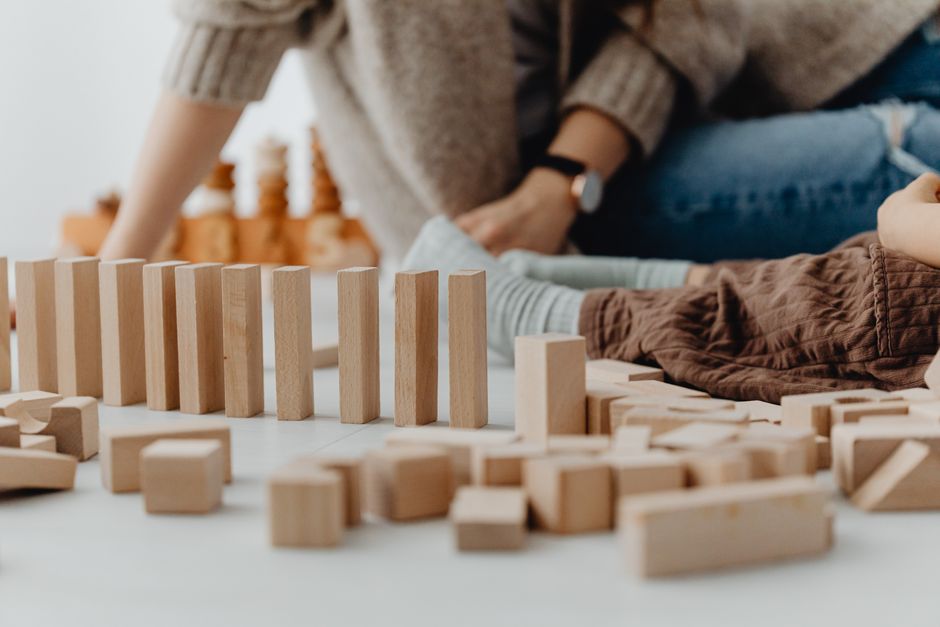
Once upon a tower of wooden blocks, a little builder named you reached for one more square. Up, up it went — until… wobble, wobble, crash! But here’s the magic: every time those blocks tumble down, your brain is quietly learning something amazing about the world of shapes and space.
What Is Spatial Awareness?
Spatial awareness is a big phrase for a simple idea: it means knowing where things are. It’s how you understand that the red block sits on top of the blue one, that your cup is next to your plate, and that you need to scoot around the chair to reach the door. Your body and your eyes work together like a tiny team, measuring the space all around you.
📖 Big Word: Spatial
“Spatial” (say it: SPAY-shul) means anything to do with space — like how big something is, or where it sits.
Why Do Building Blocks Help?
When you play with blocks, you are really a little scientist testing ideas. You pick up a block and your fingers feel how heavy it is. You stack it and your eyes check if it’s straight. If the tower leans too far, gravity gives you a gentle lesson and down it goes! Each try teaches your brain how shapes fit together — which ones balance, which ones slide, and which ones make a wobbly mess.
Blocks come in squares, rectangles, triangles and arches. As you choose which piece goes where, you are learning to compare sizes and imagine shapes in your mind before you even touch them. That clever “picturing in your head” is a superpower you will use for the rest of your life.
🌟 Did You Know?
The same brain skills you grow stacking blocks help you later with reading maps, doing puzzles, and even maths!
How to Build and Grow
The best part is that there is no wrong way to play. Try building a tall, tall tower and count how high you can go before it tips. Then try a wide, flat road for your toy cars. Make a bridge with an arch in the middle and drive something underneath it. Each new shape you make sends your brain a brand-new puzzle to solve, and solving puzzles is how we get smarter.
Grown-ups can join the fun by gently asking questions: “Can you put the small block under the big one?” or “What happens if we build it beside the wall?” Little words like under, beside, between and behind help you name the space you already feel.
Spatial Skills: A Superpower for STEM
Here’s something wonderful that scientists have discovered: children who are good with shapes and space often go on to do really well in maths, science, and engineering. In fact, the more a child plays with blocks and puzzles when they’re little, the stronger those thinking skills tend to become. One especially clever skill is being able to picture a shape turning around inside your head — and every tower you build helps grow it.
📖 Big Word: Mental Rotation
Picturing a shape spinning or flipping in your mind — like imagining how a puzzle piece would fit if you turned it around, before you actually move it. It’s a real brain superpower!
The Magic of Spatial Words
Words help your space-brain grow too! When grown-ups use “spatial words” — like on, under, above, below, next to, between, behind, and through — children get better and faster at thinking about space. These little words give names to the invisible space all around us. Try a naming game while you build: “Is teddy on the box or under it?” “Can you park the car between the two towers?”
More Ways to Grow Spatial Smarts
Blocks are brilliant, but they’re not the only way to become a space-and-shape master. Try these too:
- 🧩 Jigsaw puzzles and shape sorters — fitting pieces is pure spatial practice.
- 🧱 LEGO or Duplo — clicking bricks together to build your own creations.
- 🗺️ Draw a map of your bedroom or garden.
- 🏕️ Build a blanket fort — a giant 3-D shape you can sit inside!
- 📄 Fold paper into boats and planes (that’s origami).
- 🤸 Obstacle courses — climb over, crawl under, and go around.
Grown-ups can help most by building alongside, asking open questions, and letting the tower wobble — because every happy crash is another lesson learned.
Frequently Asked Questions
Q: What is spatial awareness?
Knowing where things are in space — like what’s on top, underneath, or next to something — and how shapes and sizes fit together.
Q: How do building blocks help my child?
Stacking and balancing teaches how shapes fit, compare, and balance, and it grows the spatial-thinking skills linked to later success in maths and science.
Q: Is block play really connected to maths?
Yes — research links early block and puzzle play with stronger spatial skills and better maths and STEM learning down the road.
Q: What are spatial words?
Position words like on, under, above, between, and behind. Using them with your child helps their spatial thinking grow faster.
Q: What else builds spatial skills?
Jigsaw puzzles, LEGO, drawing maps, building forts, folding paper, and obstacle courses — anything that plays with shapes and space.
📚 Where we learned this (for curious grown-ups):
• DREME (Stanford) — Spatial Reasoning & Math Talk
• NAEYC — Block Play & STEM Learning
• NAEYC — Developing Your Preschooler’s Spatial Thinking
The Big Idea
Every wobbly tower and every happy crash is your brain drawing a map of the world. So next time you reach for that one more block, remember — you’re not just playing, you’re becoming a master of shapes and space, one stack at a time.