Plants don’t have mouths, teeth, or stomachs — yet they grow big and strong. How? They’ve discovered something amazing: how to turn sunlight into food! 🌱
The Magic Process: Photosynthesis
Plants use a process called photosynthesis (foh-toh-SIN-thuh-sis). The word means “putting together with light.”
Here’s what happens, step by step:
1️⃣ The plant’s leaves catch sunlight using a green color inside them called chlorophyll (KLOR-uh-fil) — that’s what makes leaves green!
2️⃣ The roots drink water from the soil.
3️⃣ Tiny holes in the leaves breathe in carbon dioxide (CO₂) from the air.
4️⃣ Using sunlight as energy, the plant combines water and CO₂ to make sugar (the plant’s food) and oxygen (which we breathe).
Plants Help Us Breathe
Here’s the coolest part: plants release oxygen as a “waste” product of photosynthesis. They don’t need it — but we do! Every breath you take has oxygen made by a plant somewhere on Earth.
Why Are Most Leaves Green?
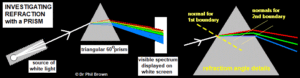
Leaves are green because chlorophyll absorbs red and blue light from the sun, but it reflects green light back to your eyes. So you see green!
Fun Photosynthesis Facts
🌳 One large tree can produce enough oxygen for 4 people every day.
🌎 Most of Earth’s oxygen actually comes from tiny ocean plants, not trees.
🍂 In autumn, chlorophyll fades and leaves show their other hidden colors — yellow, orange, and red!
Plants are nature’s solar panels — and we couldn’t live without them!